Casino Configurator
AI Croupiers in Live Casinos: BetGames’ Experiment
Artificial intelligence continues expanding into sectors traditionally based on direct human interaction. Digital assistants already handle customer support, create media content, and automate communication processes, while gambling platforms are now testing whether similar technologies can function inside real-time casino broadcasts.
Details of the Experiment
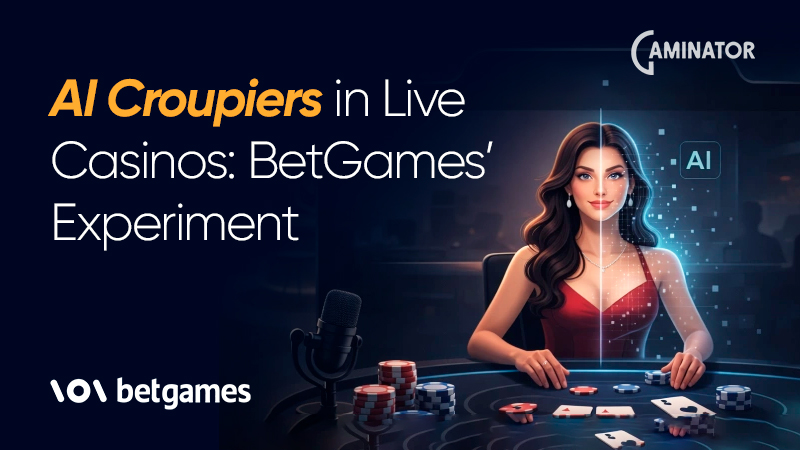
The entire project was developed to make the transition appear as natural as possible for viewers. Instead of using obviously synthetic characters, BetGames created AI avatars closely resembling presenters already familiar to regular audiences.
Such broadcasts were conducted over several days. During the sessions, the digital dealers interacted with punters as traditional hosts do, speaking directly to the camera while maintaining the standard flow of gameplay.
Behind the scenes, the provider monitored several important metrics, including:
- average session duration;
- betting volume;
- stake size;
- total number of wagers placed.
The collected data revealed no meaningful changes in audience behaviour. Users neither increased their activity nor showed reduced interest in the games. Importantly, players did not leave sessions earlier than usual.
For an industry increasingly investing in automation and artificial intelligence, the outcome proved surprising. From a technological perspective, the project can be considered highly successful. According to the published results, more than 70% of punters failed to identify AI-generated hosts. However, from a business standpoint, the benefits remain unclear when financial and operational indicators remain virtually identical.
Main Technical Obstacles
Although AI dealers successfully reproduce human appearance and behaviour, several nuances still limit their broader adoption across live casino studios.
The most significant issues for integration of virtual hosts include:
- Speech generation. AI-created voices have improved considerably in recent years, but real-time broadcasting quickly exposes even small imperfections. Minor pauses, robotic intonation, or unnatural pronunciation become noticeable almost immediately.
- Lip synchronisation. Maintaining perfect alignment between speech and facial movement remains technically demanding. Even slight inconsistencies can break the illusion of interacting with a real presenter.
- Latency. Live casino broadcasts rely heavily on timing precision. Delays between voice generation, animation processing, and stream transmission can negatively affect gameplay rhythm and overall presentation quality.
- Translation accuracy. Most studios support multiple languages simultaneously. Although AI systems can perform instant translation, contextual inaccuracies and pronunciation mistakes still create visible shortcomings.
Separately, these issues may seem entirely surmountable. However, taken together, they pose serious obstacles to entertainment formats that rely on seamless interaction and consistent content presentation.
Industry Reactions and Broader Questions
BetGames’ experiment also sparked wide-ranging discussions extending beyond technical considerations.
Let us explore the most F.A.Q. in more detail:
Can Artificial Hosts Preserve Authenticity?
Live casino products have historically depended on direct human communication. Presenters contribute humour, spontaneity, emotional reactions, and personality that help maintain audience immersion. Removing these elements risks transforming broadcasts into something resembling automated video streams rather than interactive shows.
Can Artificial Intelligence Create More Flexible Experiences?
Some analysts believe AI technology could eventually allow punters to customise dealers according to individual preferences. One participant may prefer a formally dressed host speaking British English, while another may choose a more relaxed presenter communicating in Spanish or French.
Is Full Personalisation the Future?
Artificial intelligence could theoretically support entirely customised broadcasts. Appearance, accent, clothing style, communication manner, and even presentation tempo might eventually be adjustable to user preferences.
At present, however, the sector has not yet reached that level of development. More advanced adaptation systems and stronger infrastructure would still be required before such functionality becomes commercially practical.
Do AI Systems Expand Creative Possibilities?
Artificial intelligence undoubtedly opens opportunities that traditional studio operations cannot easily achieve. This potential was also highlighted by BetGames’ management during discussions surrounding the project.
The company’s representatives suggested that simply recreating existing formats does not automatically improve them. The real opportunity lies in discovering entirely new types of experiences that conventional live studios cannot currently provide.
Prospects of AI-Based Presenters
BetGames’ experiment demonstrated that digital croupiers can convincingly imitate human presenters in interactive broadcasts. Most punters did not recognise the difference, showing how far the technology has progressed in recent years.
At the same time, the research also confirmed that replacing real dealers currently delivers few practical advantages. Player engagement remained stable, while the expected operational benefits of automation were limited.
Currently, gaming studios are likely to continue relying primarily on real presenters. Nevertheless, the project remains important for the wider sector, demonstrating that AI technology can already be integrated into live show broadcasts without significantly disrupting the customer experience.

Check the information used to contact us carefully. It is necessary for your safety.
Fraudsters can use contacts that look like ours to scam customers. Therefore, we ask you to enter only the addresses that are indicated on our official website.
Be careful! Our team is not responsible for the activities of persons using similar contact details.