Casino Configurator
Djibouti iGaming Market: A Tourist-First Niche at the Red Sea Crossroads
Beyond large popular jurisdictions, niche destinations often offer more beneficial terms for gambling projects. Djibouti is not a mass-scale iGaming hub, and that is exactly why it can be interesting. The country sits between the Red Sea and the Gulf of Aden, so it naturally attracts travellers, port-linked business visitors, and regional guests who want familiar casino entertainment in a controlled setting.
This is a niche jurisdiction shaped by two forces that rarely mix in the same way elsewhere. Here, operators face strict local norms and a visitor-led leisure economy. The domestic audience is largely unavailable due to legal and religious constraints. The addressable market is small, but high-value sessions generate significant revenue for licensed venues.
Djibouti Gambling Market
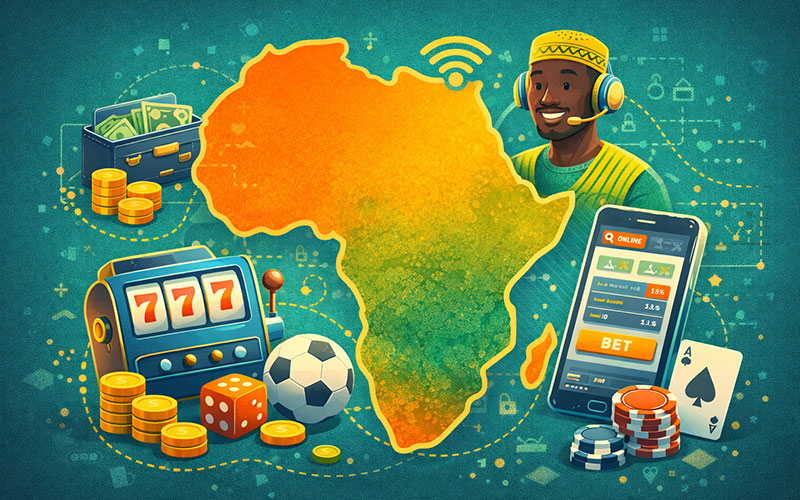
The country’s entertainment segment stays compact and visitor-led. The core format is land-based casino play aimed at foreign tourists. The online space remains unregulated and mostly driven by offshore access.
Indicative markers that describe the market:
- The estimated annual casino GGR is around $15 million.
- The approximate active players per year are roughly 5,000–10,000, mainly tourists and expatriates.
- The ongoing trend is low to moderate uplift linked to tourism and port-related traffic.
- Offshore sites are reachable, but there is no dedicated remote law.
- There is no national state lotto, so players use foreign draws via online services.
The country’s appeal comes from positioning. A few conditions make the destination attractive as a specialist play rather than a mainstream expansion.
Key factors help explain the niche logic:
- A strategic location that supports the stopover demand. The coastline position at a major shipping corridor promotes business travel, which can translate into premium leisure spend in integrated hotel venues.
- A regional gateway story that operators can understand quickly. Many firms view the country as an entry point for nearby visitor flows linked to Ethiopia, Eritrea, and Somalia, even if the local consumer base stays constrained.
- Revenue that can skew to fewer, higher-value sessions. High-stakes play is a meaningful part of total casino takings, so the business model depends more on the quality of spend than on footfall.
- Land-based licensing that can move faster than in many peer jurisdictions. An approval window of around four to six months can look appealing for investors who want a defined timeline.
Market Size and Growth
Exact revenue data is unavailable due to limited GGR studies for remote activity. Even so, the land-based segment is widely treated as a small niche, with estimates commonly placed under $10–20 million per year for casino GGR in the region.
Tourism plays a central role in the wider economy. The sector is described as being tied to overseas arrivals, with travel-linked revenue figures suggested at roughly $90 million in 2024 from around 100,000–150,000 foreign visitors. Growth expectations are usually described as low to moderate, with an indicative CAGR of 3% to 5% connected to port traffic and cross-border visitors, particularly from Ethiopia.
Product Reality
On-the-ground play sits inside a small number of licensed venues that mainly serve foreigners. One example from the country context is the Casino de Djibouti, which offers classic table games and slot machines for international visitors.
Remote wagering sits in a different space. There is no dedicated framework for online gambling, so access typically happens through offshore websites rather than locally licensed digital brands. This legal grey position can make product delivery and payments workable for some users. At the same time, it also creates uncertainty for operators who need predictable rules.
Content Demand
Game popularity is split by channel. Physical venues cover traditional casino entertainment, while offshore websites supply sports wagering, entertainment catalogues, and international lottery access.
Djibouti channel breakdown:
- land-based casino table games (roulette, blackjack, baccarat, poker, slots);
- online offshore sports betting (football, with attention on European leagues, AFCON, and World Cup qualifiers);
- online offshore lottery (international sweepstakes products)
- offshore iGaming (live dealer and RNG variants of roulette, blackjack, baccarat, plus slots).
Player Demographics and Behaviour
The audience is shaped by visitors and expatriates. Local participation stays extremely limited due to religious and social constraints, so most spending comes from foreigners.
Key audience traits to distinguish:
- Age bands. Around 70% are 25–54-year-olds. People aged 18–24 are more visible in mobile sports betting (around 20%).
- Gender. The majority of the audience is mostly male, roughly at 80–85%.
- Origins. Players mainly come from Ethiopia, Somalia, the Gulf states, and Europe.
- Preferences. Table games and slots in luxury hotel-casino settings are the most popular ones.
- Revenue structure. High-stakes sessions above $500 generate about 70% of gaming income.
Regulatory Landscape
Regulations distinguish land-based venues from remote access. Licensed casinos can operate in designated premises, and the model is designed to cater to foreign visitors rather than to build a domestic mass market.
Online gambling has no dedicated statute or licensing pathway. This means offshore sites remain accessible despite lacking formal recognition or supervision.
The current land-based regime is structured around three types of chance games:
- Category A: roulette, blackjack, craps;
- Category B: baccarat, poker variants;
- Category C: slots, video poker.
Historical milestones referenced in the country context include a Gambling Law passed in 1972, the opening of land-based casinos in 1983, and the later expansion of casino gaming to slot machines in 1995.
Oversight is primarily linked to the Ministry of Economy and Finance, which issues permissions and monitors compliance. Security concerns have historically been associated with the Ministry of the Interior.
A typical applicant path:
- Submit a file to the Ministry of Economy and Finance. The package usually covers game types, business format, proposed capital, a security plan, and responsible measures.
- Pay the initial fee set for the operation scope. Indicative figures range from $30,000 to $70,000, depending on venue size and product range.
- Complete background checks for owners and key staff. The process includes fitness assessments and source-of-funds verification aligned with anti-money laundering and financial rules.
- Prepare for ongoing reporting and inspections. Licence holders are expected to file financial statements and gaming statistics, while authorities conduct checks on-site.
Land-based gambling operates under a licensing model for designated premises. The remote sphere sits outside a dedicated legal structure, which creates a grey area where offshore access is possible in practice.
Taxation and Compliance
The tax picture is typically described as a blend of standard business duties and gaming-specific terms set in licence conditions. Corporate income tax is around 25% of net profit, which applies in the same way it does for other sectors.
Casino licences can also include turnover- or GGR-linked levies, alongside fixed annual amounts defined in the permit terms. On top of that, operators face employment taxes and social contributions, plus VAT or other indirect deductions for non-gaming services at integrated resorts, such as rooms, food, and beverages.
Compliance expectations focus on control, transparency, and cultural sensitivity. Remote play has no separate tax regime, which reflects the lack of formal recognition for online operators.
Key priorities usually include:
- internal controls like written procedures and audit trails;
- player surveillance and venue monitoring;
- AML records, KYC files, and reporting discipline;
- technical standards for machines and table requirements;
- cash handling like secure counting, collection, and storage;
- marketing limits with culturally sensitive messaging and no aggressive local targeting.
Payments and Infrastructure Constraints
Financial behaviour reflects the practical realities of the local economy. Cash dominates at physical venues, partly because card adoption is not widespread. Visiting guests may use debit or credit cards.
Mobile payments are another important shift to watch. The D-Money application, supported by Djibouti Telecom and Saba African Bank, helps digitize payments over time.
Connectivity remains a challenge for remote products. Weak internet infrastructure raises delivery risks for online casino content, so any serious digital approach often requires collaboration with local ISPs and strong technical redundancy.
Competitive Landscape

The regulated land-based field is concentrated in the capital and is tied to hotel settings that serve business and leisure guests. The list of venues is short, which keeps the market tightly clustered.
The main brick-and-mortar names:
- Aden Bay Casino (a gaming hall slash hotel operation in Djibouti City aimed at business and leisure tourists);
- Safari Casino Club (a gambling venue attached to a residential area in the capital with a high appeal among regional visitors and expatriates);
- other hotel-casino floors in the city (smaller gaming areas built for niche, high-value guests);
- large brands with gambling facilities (venues associated with entities such as Djibouti Palace Kempinski and Sheraton to pull premium travellers).
Digital play is dominated by international operators that accept users from the country without a local online licence. These platforms typically offer multi-language experiences, often in Arabic, French, and English.
The commonly referenced offshore names:
- Betwinner (sportsbook and casino mix, with regional league coverage and a strong payouts narrative);
- Melbet (sportsbook and casino offering that is visible via affiliate promotion in the region);
- other similar brands (operators with offshore licences that deliver a standard sportsbook/casino bundle).
Formal market-share numbers are not widely published. The limited set of licensed venues captures essentially all regulated casino revenue, since the land-based footprint is small. Online activity follows a different pattern. Offshore brands generate the majority of remote betting and casino play because there are no locally registered operators with digital products.
Trends, Opportunities, and Challenges
Behaviour reflects a mix of luxury leisure and event-based sports interest. Casino visits tend to be social and tied to hospitality, while online sessions are usually shorter and focused on football.
Expatriate and business travellers often prefer classic casino environments with dining and nightlife. Regional visitors can lean into table formats such as roulette and poker, especially in venues attached to premium hotels.
Local citizens typically avoid visible participation. Religious teaching treats gambling as haram, and social pressure adds an extra barrier, which keeps domestic demand limited even where access exists.
The upside lies in targeted positioning and careful execution. The destination can reward operators who accept the niche nature and build around visitor value without the desire to chase mass-market scale.
Practical opportunities of licensing in Djibouti:
- Tourism-led venue upgrades with hospitality packaging. Bundled offers that combine accommodation, dining, and premium tables can raise spend per guest.
- Hybrid models that use mobile money as a bridge. D-Money adoption can support smoother payment journeys over time, especially for guests who prefer digital rails.
- Language-first localisation for regional travellers. French and Arabic interfaces, plus clear support flows, can improve conversion for visitors from nearby markets.
- Partnership-driven entry instead of greenfield launches. Cooperation with existing hotel-casinos can reduce friction and shorten the path to operational readiness.
- Football-led acquisition for offshore-style demand. Sports betting interest centres on
Meanwhile, constraints here are structural. Any plan must respect cultural realities, limited addressable demand, and operational friction in payments and connectivity.
The main barriers:
- Religious prohibition. Local demand is capped by Islamic norms (over nine in ten residents are Muslim).
- Small addressable base. Tourists and expatriates drive most of the activity.
- Policy ambiguity. The online grey area has no dedicated remote framework.
- Connectivity limits. Unreliable internet affects digital product delivery.
- Fiscal pressure. Licence-set levies and fees can reduce margin predictability.
- Promotion limits. There are numerous restrictions and sensitivities around local-facing marketing.
Future direction depends on whether the country adopts specific remote gaming rules. Local lawyers advocate for stronger consumer safeguards and responsible gambling standards, which may prompt regulatory formalisation.
Crypto gambling sits in a similar place to other online activities. There is no specific statute dedicated to it, so participation is possible in practice, while licensing remains absent.
A clearer framework could attract more structured investment, yet any reform will still face the core reality of limited local participation. For now, the story remains a small, tourism-led niche with a defined land-based pathway and an unregulated offshore digital layer.
The Main Things about the Djibouti iGaming Market
The country is best read as a specialist destination and not a volume play. The strongest opportunities come from tourism-linked demand, premium hospitality, and a tightly controlled land-based footprint.
Key aspects about the jurisdiction:
- Djibouti’s regulated casino scene is small, tourist-focused, and often estimated at around $15 million in annual GGR.
- Local participation stays minimal due to legal and religious barriers, so revenue depends heavily on visitors and expatriates.
- Online play sits in a grey area with offshore access, while weak internet infrastructure adds operational risk for remote delivery.
- Licensing is centred on the Ministry of Economy and Finance, with indicative fees of $30,000–70,000 and timelines of roughly four to six months.
- The most realistic growth levers are hotel-casino partnerships, multilingual service, football-led betting demand, and mobile money expansion via D-Money.

Check the information used to contact us carefully. It is necessary for your safety.
Fraudsters can use contacts that look like ours to scam customers. Therefore, we ask you to enter only the addresses that are indicated on our official website.
Be careful! Our team is not responsible for the activities of persons using similar contact details.