Casino Configurator
Finland Ends Gambling Monopoly and Launches a New iGaming Market
Finland is preparing for the most significant changes in its online casino and sportsbook sectors in recent decades. The country is moving away from its long-standing monopoly model and creating a new licensed market for private businesses.

Finnish Gambling Culture
The country has one of the world’s highest participation rates for betting and casino entertainment. Around 70% of the population engages in some form of wagering each year.
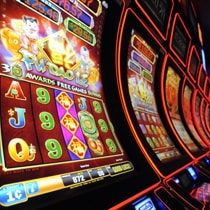
Lottery draws remain a popular part of Finnish culture, especially on weekends. Many supermarkets, petrol stations and kiosks across the country have slot machines. Online gambling is also commonplace, and Finnish punters are used to placing bets through digital platforms.
Currently, the entire sector is controlled by the state-owned operator Veikkaus. The company has held exclusive rights over casino products, sports wagering, lottery draws and slot machines for many years.
End of the Monopoly Structure

The Finnish parliament approved a new gambling bill in December 2025. Under the changed framework, private businesses will be allowed to apply for B2C licences and launch online casino and sportsbook platforms from July 1st, 2027.
Veikkaus will still keep exclusive rights over:
- land-based slot machines;
- lottery draws;
- scratch cards.
The licence application process opened in March 2026. Since then, many casino owners have started studying the rules, reviewing the market and preparing their launch strategies.
Verified businesses will pay a flat 22% tax on gross gaming revenue. There will also be an annual supervision fee.
The exact amount of the levy depends on the size of the operator’s income:
- €4,000 for companies with less than €100,000 in yearly GGR;
- higher fees for larger businesses;
- up to €434,000 for operators with an annual GGR of at least €50 million.
Most industry experts expect the licensing process to take between 3 and 6 months.
Market Size and Revenue Potential
Finland has around 5.6 million residents, of whom roughly 4 million are adults. Even though the population is relatively small, gaming spending is very high.
According to H2 Gambling Capital, Finland’s total GGR reached an estimated €1.9 billion in 2026.
The market is divided across several main segments:
- €1.1 billion from gaming products;
- €269 million from betting;
- €456 million from lottery activity.
Online channels are especially important, as around 81% of total GGR comes from digital casinos.
Finland has also ranked among the countries with the highest gambling losses per resident. This shows that player spending is already well established.
Decline of Veikkaus’ Monopoly Model
Support for reform grew during the late 2010s. One of the main reasons was a decrease in Veikkaus' market share. Even with a monopoly in place, many Finnish punters continued to use international websites. This created a large grey zone and reduced the amount of gambling revenue staying inside the regulated system.
The channelisation rate in Finland is currently estimated at around 50%. About 10 years ago, it was close to 90%.
Veikkaus itself calculated that it controlled around 51% of the market entering 2026. The operator’s GGR for 2025 reached €931 million. In 2017, the same figure was around €1.8 billion.
These numbers show that the monopoly model was losing its ability to keep customers inside the regulated sector.
Shadow Market Risks
One of the main concerns for operators is the lack of strong enforcement tools against unlicensed companies. Several industry experts believe the new law does not give the regulator enough rights.
The framework includes some measures against offshore casinos:
- taxation on income from unregistered activity;
- stronger review of Finnish-language websites;
- more attention towards companies targeting the local audience.
Under the old system, operators could still offer Finnish-language platforms as long as they did not directly provide their products to residents. According to the new law, the use of the Finnish language itself may attract regulatory attention.
However, there are still concerns because several important tools are missing:
- payment ban;
- stronger website blocking;
- more direct sanctions against illegal operators.
Official figures show that Finland’s National Police Board sent no prohibition orders to unlicensed organisations during the previous 12 months. The regulator issued 14 warning letters during that period — 10 orders to individuals and 4 to operators.
The named brands included:
- Magic Poro Ltd;
- Blixx Gaming Ltd;
- Befuria GO OÜ;
- White Hat Gaming Ltd.
The sector's main stakeholders believe Finland should avoid the same problems seen in Sweden, where most enforcement actions have focused on licensed operators rather than shadow companies.
Industry Sentiment
Despite the remaining concerns about regulation, the general mood around Finland’s new launch is positive.
Many companies believe the country offers strong long-term potential because of:
- high gambling participation;
- strong online behaviour;
- stable customer spending;
- good revenue opportunities.
Legal experts believe that between 40 and 50 operators may hold licences by the time the market opens. There are still concerns that the sector could become crowded. Finland is still a relatively small country, and not every brand may be able to achieve sustainable growth.
Smaller operators may struggle because they often have:
- lower marketing budgets;
- weaker brand awareness;
- fewer existing audience.
Larger firms are expected to have an advantage, especially in traditional media and sponsorship deals.
Responsible Gambling Requirements
Finland’s new system has many similarities with the Swedish model. Most industry stakeholders believe the overall structure is workable. However, there is still uncertainty around the exact requirements.
In January, the Ministry of Social Affairs and Health published draft responsible gaming guidelines.
The proposed measures included:
- a central system for loss limits across all operators;
- temporary account freezes;
- continuous player monitoring;
- monthly and yearly loss limits;
- different intervention levels based on customer risk.
The draft also stated that AI tools should not be used to meet legal requirements for detecting problem gambling. This proposal received criticism from operators and niche experts. Many believe such rules could make the official market less attractive and push players towards offshore websites.
There is also confusion because these responsible gambling measures are currently described as guidelines rather than legal obligations. Even so, many stakeholders believe the regulator should use them as an unofficial standard.
A revised version of the guidance is expected soon. Many companies hope the next variant will create a better balance between player protection and commercial reality.
Marketing Restrictions
Promotion is expected to become one of the most difficult compliance areas.
The new system places heavy restrictions on advertising, including:
- a ban on affiliate marketing;
- a prohibition on influencer activity;
- limits on social media ads;
- restrictions on bonuses.
Gaming companies will mainly be allowed to promote their products through:
- traditional media;
- sports sponsorships;
- their branded social media channels.
Many companies believe this approach could create problems for channelisation.
There are also several areas where the law still lacks detail:
- digital content linked to print media;
- celebrity involvement in advertising;
- social media sponsorship rules;
- the exact definition of acceptable bonuses.
The new system will ban welcome incentives and acquisition offers. Operators will also not be allowed to offer personalised or segmented promotions. Moderate bonuses for returning customers may still be possible, but there is no clear definition yet.
There are still no direct answers on:
- what qualifies as an existing user;
- how long an account must remain active;
- what level of bonus is considered acceptable.
Further guidance from the regulator is expected before the official start.
Interest from Operators
Attention to the Finnish gaming sector is already strong. As of March 30th, 2026, 24 companies had already submitted licence applications to the National Police Board.
More businesses are expected to register once there is more clarity around:
- responsible gambling standards;
- marketing limitations;
- bonus policies;
- player protection measures.
Industry estimates suggest that 40–50 operators may enter the jurisdiction. Each business will also be able to launch several firms under a single licence.
Main Market Competitors
Veikkaus is expected to remain one of the strongest brands in the state.
The company already has several important advantages:
- strong local recognition;
- a large customer base;
- long-term experience in the country.
Veikkaus has already started preparing for the fresh competitive conditions. The operator has been updating its systems, working with new suppliers and hiring more international talent. The firm sees high growth potential in the online casino sector because it will finally be able to cross-sell products more freely.
Other operators are also expected to compete strongly. Hippos ATG plans to focus mainly on horse racing and sports betting, while also building a position in the digital casino niche, which is foreseen to become the most competitive field.
The Main Things About Finland’s iGaming Sector Launch

Finland is expected to become one of the most attractive legal gambling markets in Europe. The jurisdiction combines high player participation, strong online demand, and a customer base already familiar with betting and casino solutions.
Many operators believe Finland can deliver strong long-term value because of its high spending levels, a growing online sector, and a stable economy.
However, several important risks remain before launch:
- weak enforcement against unlicensed operators;
- unclear responsible gambling rules;
- strict marketing restrictions;
- uncertainty around bonus policies;
- possible market saturation.
At the same time, the reform is expected to bring significant benefits to both the government and the industry.
The new market could deliver:
- higher channelisation;
- stronger player protection;
- more tax revenue;
- better product choice;
- greater competition;
- more business opportunities for operators.
Finland’s licensing system and a new gambling market are likely to become one of the most significant developments for the European entertainment sector over the next 2 years.

Check the information used to contact us carefully. It is necessary for your safety.
Fraudsters can use contacts that look like ours to scam customers. Therefore, we ask you to enter only the addresses that are indicated on our official website.
Be careful! Our team is not responsible for the activities of persons using similar contact details.