Casino Configurator
How Prediction Markets Entered US Betting and Sparked a Legal Struggle
In 2025, prediction markets moved from niche experiment to major controversy in gambling. The category of prediction markets moved into the centre of a legal conflict that forced regulators, operators, and investors to pick a framework.
One side of the debate treats outcome-based contracts as federally supervised derivatives. The other part sees the same user experience and calls it sports wagering that must sit inside state licensing rules. That push and pull set up 2026 as a defining year for how these products will exist, where they can operate, and which compliance standard will apply.
Prediction Markets in 2025
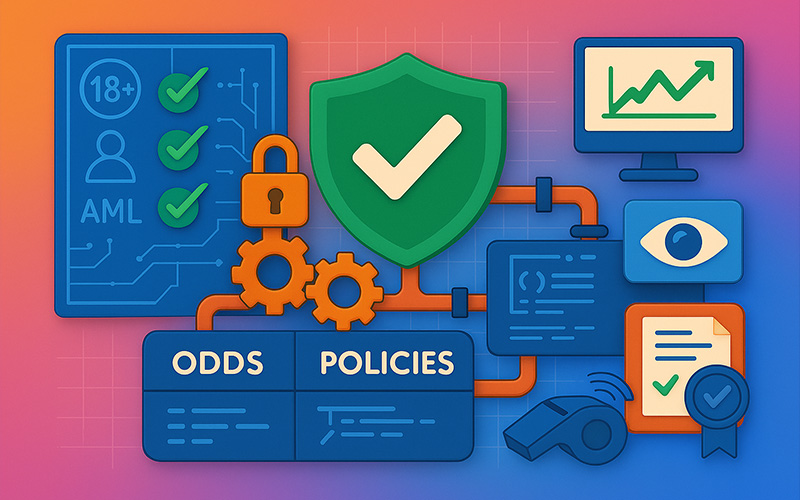
As users interact with such services, they buy and sell contracts tied to a real-world result, and the price moves as sentiment and liquidity shift.
What the offer usually includes:
- outcome-linked contracts on real events;
- market pricing rather than fixed odds;
- one catalogue across sport, politics, economics, finance, and culture.
In 2025, federal oversight pulled event contracts into a derivatives-style lane, while state gaming systems pushed back when sport entered the mix.
Federal Approval in 2025
Legal permissions enabled near-nationwide distribution for event-contract exchanges. That pathway also appealed to brands that already know how to scale digital products and acquire users across many territories.
At the same time, sport-linked activities raised the stakes. A contract on a match result can feel identical to a bet to the end user, even if the wrapper uses financial language.
Sport-Linked Contracts as Wagering
State authorities focus on consumer experience. When activity resembles sportsbook behaviour, regulators apply gambling definitions first, then address licensing.
A second driver is protection tooling. Licensed wagering operators follow strict expectations on age checks, location controls, integrity monitoring, and responsible play measures. At the same time, derivatives-only supervision does not always align with those state requirements.
Changes for Operators and Suppliers
For B2B audiences, the key risk is structural rather than tactical. A product can sit in compliance under one regime and still trigger enforcement under another.
That creates a planning problem for everyone in the supply chain. Technology roadmaps, KYC flows, risk controls, and go-to-market plans now depend on how courts and regulators define the boundary between a derivative and a wager.
US Legal Confrontation
In early December, a Connecticut dispute became the year's most cited example. Local consumer protection officials issued cease-and-desist orders to Kalshi, Robinhood’s derivatives unit, and Crypto.com, with the claim that sports-linked contracts amounted to unlicensed online betting.
The argument implied that if a contract pays out based on whether a team wins or whether a player hits a performance threshold, the function matches a wager. The framing as a derivative product did not change how regulators classified the activity.
After the initial action, the authorities highlighted several pressure points. In their view, the platforms did not sit under the same safeguards that apply to licensed operators.
Key concerns raised in the dispute:
- limited eligibility for online wagering under state rules;
- age verification expectations;
- location controls and geofencing standards;
- integrity monitoring obligations;
- responsible play safeguards.
Kalshi responded by challenging the order in federal court, and it argued that the Commodity Futures Trading Commission holds jurisdiction over regulated event-based derivatives. Robinhood and Crypto.com signalled similar positions and also indicated openness to engage with state officials when required.
The case quickly became the reference point for 2025. If the state’s approach wins, sports-linked exchanges may face the same state-by-state licensing reality as sportsbooks. If the platforms prevail, they gain a clearer route to scale under federal rules without local gambling permissions.
Meanwhile, Nevada took a more measured route, yet it ended in a consequential outcome. Across 2025, public workshops and hearings examined event-contract trading through the lens of integrity, data flows, and compliance.
Later in the year, a federal judge in Las Vegas ruled that Kalshi is subject to Nevada gaming law for sports-related contracts. That decision strengthened the state’s ability to treat the product as wagering and restrict it unless it meets local licensing requirements. Kalshi has indicated it will appeal, and it continues to position its sports markets as derivatives regulated by the CFTC rather than bets.
After the broader discussions, the state’s stance developed in a clear sequence:
- Nevada used public sessions to put event contracts inside mainstream integrity debates, which kept the topic close to the sports betting rulebook.
- A late-November court decision reinforced the local position and gave regulators a stronger footing on classification.
- Digital risk concerns increased after prominent 2023 casino cyberattacks, leading to stricter oversight of products outside traditional audit structures.
For B2B readers, the Nevada message is blunt. If customers experience the product as betting, many regulators will label it as wagering, even when the technical categorisation points to federal financial law.
DraftKings Moves of the Year
In October, the company announced its acquisition of Railbird Technologies. Together with the brand, they also received its CFTC-regulated event-contract exchange, Railbird, as a deliberate entry into prediction markets.
This was not framed as a minor experiment. The deal positioned event contracts as a strategic extension of the group’s reach, with a dedicated product roadmap.
What the Railbird Acquisition Signals
The purchase shows that large sportsbook brands no longer want to stay on the sidelines. Instead of waiting for the category to stabilise, a leading operator chose to secure infrastructure that already sits under federal supervision.
That choice also suggests a new type of competitive moat. Control over an exchange platform can shape pricing, market depth, and product variety in ways that fixed-odds models cannot replicate.
What a Dedicated Predictions App Unlocks
DraftKings has outlined plans for its separate application. The intention is to let users trade regulated contracts on outcomes across finance, culture, and entertainment, with room to introduce sport-related markets where legally permissible.
From a commercial angle, this opens a path into territories where online sports betting remains unavailable. It also broadens the product suite beyond sportsbook activity into market-priced instruments that reward liquidity and user engagement.
Where Sports-Related Contracts Fit
Legal permission is the critical factor. Sport-linked offers are central to the classification dispute. Product design depends on which jurisdictions accept derivative framing versus gambling rules.
Entry into prediction markets doesn't reduce compliance complexity. It creates dual-framework conflicts between state and federal interpretations.
Top Brands’ Expansion Strategies
Alongside DraftKings, 2025 also brought faster scaling from platforms that focus directly on event contracts with sports relevance.
Fanatics Markets
The brand launched a standalone prediction-market app in around two dozen states. The build relied on a CFTC-registered futures broker acquired earlier in the year, and the offer covered outcomes across sport, economics, finance, and politics. Fanatics also emphasised that the app would not operate in states where its sportsbook is licensed, which positions event contracts as an acquisition channel in territories without online betting.
Polymarket
The company returned to the US market with a restructured, CFTC-compliant model and relaunched an app with a strong emphasis on the sports-related niche.
After the overview, the comparison comes down to a few positioning choices:
- standalone app distribution rather than sportsbook embedding;
- state coverage tactics tied to existing wagering footprints;
- growth ambitions under a federal event-derivatives framework.
For 2026, these approaches matter because they test how far a nationwide model can scale without the state-by-state gambling path. Each expansion step also increases the chance of direct confrontation with local gaming enforcement.
Flutter
Late in 2025, the company confirmed entry into the segment through FanDuel Predicts, built with CME Group. The rollout begins at the end of 2025 and continues through 2026.
This move adds weight because it brings a major sportsbook brand into the category with institutional partnership credibility. It also signals that large operators see prediction markets as more than a novelty.
The stated positioning mirrors the Fanatics logic. FanDuel Predicts aims at states where online betting remains prohibited, and it operates separately from the licensed sportsbook footprint. That structure aims to create a parallel acquisition route under federal rules while keeping licensed wagering operations intact.
Kalshi
In 2025, the group expanded rapidly and gained broader mainstream attention. New funding pushed its valuation into the tens of billions of dollars, while the range of markets grew well beyond politics or economics alone. Sports contracts sat alongside economic indicators, weather events, and political outcomes.
Public visibility also changed. Multi-year data partnerships with major business news networks mean Kalshi probabilities will appear across television and digital platforms during 2026, which positions event markets as another layer of public financial information.
After that growth, scrutiny increased. Connecticut’s enforcement actions and Nevada’s court ruling placed Kalshi at the centre of the debate over how far federal pre-emption reaches when sports outcomes are packaged as derivatives.
PredictIt
The company remained relevant in 2025, even as newer brands grabbed attention with sports-linked contracts. A mid-year federal court ruling allowed the platform to keep offering political events under an expanded, fully authorised framework after a long dispute with the CFTC.
Its focus on elections rather than sport makes it a frequent example in policy discussions. Many observers treat it as proof that prediction markets can exist inside clearly defined boundaries.
This contrast highlights the current divide. When the catalogue stays in politics, the product looks easier to frame as an event contract market. Once sport enters the offer, the activity starts to resemble wagering in the eyes of state gaming systems.
Robinhood and Crypto.com
Beyond specialist exchanges, 2025 also brought prediction-market activity into mainstream retail trading apps. Robinhood and Crypto.com added sports-linked event contracts within broader multi-asset environments, and that crossover drew immediate attention from Connecticut regulators.
The classification issue did not soften because the contracts sat beside other trading tools. Local authorities still treated sports outcome contracts as unlicensed wagering, even when the platforms pointed to federal compliance.
For operators and suppliers, this crossover matters because it expands the competitive set. The category is no longer limited to gambling brands or niche exchanges, which can accelerate consumer awareness while also increasing regulatory pressure.
Divided Industry and the AGA Fight

The 2025 surge exposed a growing fracture inside the gambling sector about who should control sports-adjacent products. Land-based casinos, state-licensed operators, and traditional stakeholders argue that national exchanges offering services such as sports outcome contracts without state licences weaken exclusivity arrangements and undermine consumer protection standards. Event-contract platforms and digital-first groups argue that these markets provide transparency, liquidity, and formats that fixed-odds frameworks do not offer.
Why Incumbents Call this Unlicensed Wagering
Official sportsbooks operate under strict compliance obligations, and many stakeholders reject the idea of a product that looks like sports betting operating outside those same obligations.
That argument becomes sharper in states where only a narrow set of licensees can legally offer online wagering. In those territories, prediction markets can be seen as a bypass rather than a new category.
Why Platforms Argue for Transparency and New Scope
Supporters highlight the market-driven nature of the product. Pricing reflects collective expectations, and deeper liquidity can, in their view, produce a more transparent signal than a traditional sportsbook line.
They also point to broader catalogues that include finance, culture, and macro outcomes, which sit outside typical sportsbook coverage. That wider scope supports a narrative of innovation.
How the Split Turned Strategic
The American Gaming Association strongly criticised prediction markets in 2025. YouTube campaigns characterised these platforms as 'still betting,' reinforcing views that they offer wagers without sportsbook oversight.
In response, FanDuel, DraftKings, and Fanatics resigned from the AGA, with the position that the association no longer matches their product strategies as they move into federally regulated event markets.
The break developed through a clear chain of events:
- Public messaging escalated and placed the category in front of a broad audience, not only regulators.
- Major sportsbook brands distanced themselves from the trade group as their own roadmaps shifted.
- Many large groups stayed undecided, while they weighed direct entry, selective partnerships, or a wait-and-see posture.
For suppliers and investors, this division is not a background story. It shapes lobbying pressure, enforcement expectations, and partnership dynamics for 2026.
2026 Decisions
After 2025, the category will have a permanent place on the strategic agenda of US gambling. What remains unclear is the final shape, whether it will be complementary, competitive, or hybrid.
The next phase can move in three broad directions:
- Courts favour a wider federal primacy view, which gives federally supervised exchanges a clearer path to nationwide operation.
- States succeed in pulling sport-linked contracts into gambling frameworks, which forces licensing, restrictions, or outright prohibitions in key territories.
- A hybrid outcome emerges, where non-sport event contracts expand under federal supervision while sport-related products face tighter local boundaries.
For operators, the decision is no longer whether prediction markets exist. The real question is how to build products and compliance stacks that can survive conflicting interpretations.
The Main Things about Prediction Markets
Innovation accelerated in 2025, but regulation moved faster. The sector faces genuine conflicts that will determine commercial winners and compliance standards in 2026.
Key aspects about prediction markets:
- Federal derivatives supervision and state gambling law now compete to define the same sport-linked contract activity.
- Connecticut and Nevada became the key enforcement and court reference points for how authorities may classify these products.
- DraftKings, Fanatics, and Flutter treated prediction markets as strategic by building or acquiring dedicated infrastructure and apps.
- Kalshi’s rapid scaling and mainstream media distribution increased category visibility and concentrated legal scrutiny.
- The gambling industry split publicly, as the trade group conflict and major brands repositioned around federally regulated event markets.
If you operate or supply gambling products in the US, you should plan for a dual-regime world in 2026. Flexible product design, adaptable compliance controls, and a clear strategy may be the result of a “contract” being treated as a “bet.” Gaminator closely monitors the situation and notifies clients of any changes to the regulations.

Check the information used to contact us carefully. It is necessary for your safety.
Fraudsters can use contacts that look like ours to scam customers. Therefore, we ask you to enter only the addresses that are indicated on our official website.
Be careful! Our team is not responsible for the activities of persons using similar contact details.