Casino Configurator
iGaming in 2026: The Attention Battle, Affiliate Reset, and Web3 Reality
Last year pushed the online gambling niche through a rough obstacle course. The industry experienced tighter rules, ad pressure from major traffic sources, higher acquisition costs, and platform changes that caused real operational pain. Many teams felt it in budgets, workflows, and even basic stability.
Yet hard markets tend to expose what matters. Strong players use turbulence as a filter, then turn it into a map for new growth. Gaminator offers a detailed insight into what the next year will look like. Our experts break down existing and upcoming trends to help you find out how prepared you are for the online gaming roller coaster in 2026.
Marketing as an Ecosystem

The next cycle will not belong to a single magic ad source or a clever promo. The winners will connect their marketing channels so each one feeds into the next.
One Identity, any Touchpoints
A strong strategy uses different channels without losing focus. One channel builds the community, another keeps players active, and offline events add trust where it helps.
Hyperlocalisation
Global expansion sounds simple until you meet genuine people in real regions. Local language, creators, pain points, and even jokes decide whether a message feels native or fake.
What will define a strong marketing approach in 2026:
- Build meaning first, then buy distribution. A clear message lifts performance later because it reduces scepticism at the first click.
- Use content as a multi-tool, not decoration. One format can educate partners, warm up players, and support retention when the angle changes.
- Treat the community like an asset with upkeep. A healthy space needs moderation, cadence, and a reason to return.
- Add offline touchpoints when they support trust. Physical activity can strengthen recall in markets where digital ads face pressure.
- Connect acquisition with retention. A funnel that ends at registration is a leak.
Attention as the Rarest Currency
Partners, media buyers, and webmasters receive too many offers every day. In 2026, any B2B message must deliver relevance immediately, or it will disappear in the scroll.
What instant value looks like for a demanding professional audience:
- case studies with outcomes;
- clear metrics and benchmarks;
- GEO-specific insights;
- real economic results;
- practical conclusions.
Reputation Games
The iGaming industry has always had an appetite for noise, rumours, and anonymous commentary. That will not vanish in 2026 because gossip is a simple engagement engine in almost any community.
A scandal can create cheap reach, but it damages credibility and makes partnerships harder to secure later.
Large, mature groups usually avoid this path because the downside is not theoretical. Smaller newcomers, especially those that want a loud entry, may still use darker tactics because they value speed over long-term perception.
Informal sources often feel closer to the truth for readers, even when the quality is mixed. That dynamic keeps engagement high and discussion active. The real question is not morality, it is strategy fit. A brand that plans to scale with stable partner relationships must protect trust like a core asset.
Anti-Trends Avoidance
Some approaches still appear in the market, but they deliver weaker results each quarter. The sector moves fast, and outdated habits look obvious to experienced eyes.
The clearest anti-trends that teams should avoid:
- mass B2C tone in B2B outreach;
- reach bait without a point;
- position-free identities;
- memes with no goal;
- expert posts that say nothing;
- generic text that feels auto-made.
Predictability of Affiliate Programs

Partners now focus on practical details. Loud branding helps, but operators choose programs based on clarity, stability, and support quality.
Webmasters want to understand KPI logic, approval rules, and hold policies before they commit serious volume. Without transparency, there is no foundation for long-term cooperation.
Competitive rates still matter, yet money alone does not fix uncertainty. Fast payouts, consistent processes, and a reliable service layer form the real core.
What keeps partners loyal when costs rise and competition tightens:
- Clear terms that do not change mid-flight. Stability beats “surprises” even when the headline number looks slightly lower.
- Predictable approvals with understandable reasoning. A partner can optimise only when they see the logic.
- Quick payouts that match the promised schedule. Trust erodes fast when payments slip without explanation.
- Managers who respond and solve issues. The speed of feedback often decides whether a partner scales or leaves.
- Reports that support decisions. Clean analytics turns cooperation into a system.
Community Building
Audiences are tired of formats that copy what worked before. Voice chats, podcasts, and giveaways can still work, but people skip content without real value. The problem is not the format but a lack of real expertise and a shortage of guests who can speak with responsibility and depth.
In 2026, a strong community will grow around value that people want to discuss, challenge, save, and repost. Practical guides, honest case breakdowns, and open debate respect the intelligence of the audience and create organic traction.
Creator Economy and Hybrid Deals
Traffic acquisition continues to evolve. Classic affiliate mechanics will remain, but blogger-led distribution will gain more influence across the market.
Affiliate and Influencer Blend
Bloggers and streamers increasingly act as true partners and not only traffic sources. Their personal reputation becomes part of the offer, which changes how teams plan campaigns.
Live Platforms and Trust
Streaming sites encourage high involvement and a strong bond between creator and viewer. That dynamic supports native integrations because the audience accepts the offer as part of the content flow.
Shifted Payment Models
A single deposit does not capture the full value of every touchpoint. Brands now look for models that reflect awareness, warm-up effects, and repeated exposure.
Directions that hybrid deal structures may take in 2026:
- More mixed compensation formats. A combination of outcomes can replace a single strict target.
- Greater interest in spend-based cooperation. Some teams may move towards models tied to budget and delivery.
- More CPM/CPC-style agreements for specific placements. Visibility and reach can become a priced component.
- Structured logo and brand-promotion packages. Some intermediaries already introduce exposure as a service.
- Clear measurement for soft value channels. Better attribution helps justify non-deposit touchpoints.
Traffic Economics
Acquisition costs keep rising, but not at the same pace everywhere. Some GEOs will spike faster, while other regions may move more slowly due to local dynamics and channel availability.
Volume is limited, and more products compete for the same attention. Crypto-first casinos can also raise the ceiling because some of them pay more per player and fight for similar audiences.
To adapt, teams must treat data as a real tool. Funnel friction and payment pass rate deserve constant checks because small losses compound across scale.
Operational focus points that matter most in 2026:
- retargeting discipline;
- remarketing hygiene;
- registration simplicity;
- payment success rate;
- clear product flow;
- faster hypothesis tests;
- brand spend as a long play.
VIP and High-Roller Expectations
Crypto casinos raised the bar for big spenders in 2025, and that pressure will carry into 2026. It becomes harder for new brands and older platforms to match the level of incentives and experience.
Leaderboard Escalation
High-stakes tournaments with huge prize pools have become common in the crypto segment. Some months show multi-million totals on leaderboards, and the actual number can be higher when the market includes more products.
RTP Pressure and In-House Expansion
Some operators push extremely high return-to-player figures, especially for internal games where fees look different. Better retention and lower churn can support that strategy, while price can also change the calculation in crypto contexts.
What VIP audiences may treat as normal in 2026:
- Bigger leaderboard pools and more frequent events. Competition becomes a retention tool instead of just a one-time stunt.
- More tailored VIP journeys. High-value players expect speed, clarity, and personal treatment.
- More aggressive offers in crypto contexts. Some brands can allocate more value back to players.
- More prominence for in-house games. External providers may find it harder to win prime shelf space.
- Higher expectations for transparency and service. Big stakes amplify every small issue.
New Product to Reshape the Market
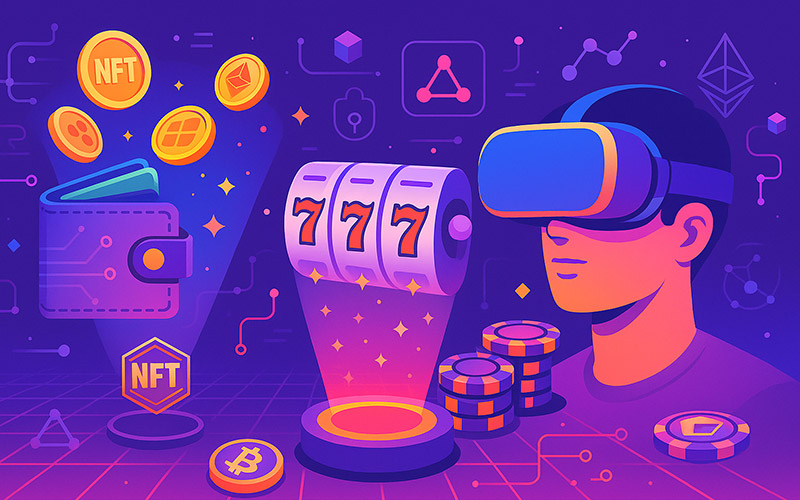
Many things change week to week. Local law, payment access, and user behaviour are not constant and are prone to regular updates. Most of these shifts stay regional and do not rewrite the global picture.
Real disruption happens when a new format captures attention and overlaps with an existing audience. Prediction-style products already showed how fast a fresh category can challenge the boundaries of traditional models.
Product First, Token Afterwards
A crypto asset on its own no longer guarantees excitement. The audience increasingly judges whether the token has a role inside the user journey.
When utility exists, a community often forms around usage. When a function is missing, discussions quickly turn into speculation and lose depth.
Signals that a token is integrated:
- clear use in the user flow;
- benefits tied to action;
- community around utility;
- value beyond trading;
- measurable effect on behaviour.
Web3 Audiences
Crypto communities can look like a dream channel until teams measure the reality. For classic Web2 products, this segment rarely becomes a massive source of volume. For on-chain offers, that audience can be the main lane.
The economics also differ. Volume can be lower, yet the average value per user can look stronger, which changes ROI logic in meaningful ways. The smartest approach treats Web3 influence as part of a wider 360-degree strategy.
Invisible Web3
Every extra step reduces conversion. That rule applies everywhere, and it hits Web3 especially hard.
The most effective approaches hide complexity and remove technical steps early on. When the product feels familiar, people adopt it without needing constant explanations.
Web3 Experiments
Scale alone does not guarantee success. At the same time, large platforms often hold a critical advantage. Their behavioural data helps understand what drives retention.
That knowledge supports targeted integration instead of blind experimentation. At the same time, any new layer affects core metrics immediately, so additions must show measurable value, or they will not survive internal pressure.
For 2026, it will be critical to understand that Web3 belongs where it adds clear benefit, not where it looks fashionable.
Digital assets are unlikely to become a standalone mass direction across the whole market. A more realistic scenario is quiet integration into infrastructure, where the technology feels as ordinary as an API or cloud layer.
For users, it is critical to find out whether the product solves the need. If the value is real, the underlying stack matters less.
The Main Things about iGaming in 2026
The next year will push the market towards maturity. Teams that connect promotion, partnerships, data, and product design into a single system will handle pressure far better than those who chase the same tactics.
Key aspects to keep in mind about online gambling in 2026:
- Attention scarcity will force B2B communication to lead with cases, metrics, and clear outcomes.
- Brand equity will matter more because credibility supports retention and partner acquisition.
- Affiliate programmes will win on predictability, service quality, and transparent rules.
- Traffic costs will keep pressure on funnels, payments, and rapid testing discipline.
- Web3 will reward utility and low friction, while VIP expectations will keep climbing in crypto-led segments.
If you want a safer 2026 market journey, start with an honest audit of your message, partner terms, data routines, and first-step user flow.

Check the information used to contact us carefully. It is necessary for your safety.
Fraudsters can use contacts that look like ours to scam customers. Therefore, we ask you to enter only the addresses that are indicated on our official website.
Be careful! Our team is not responsible for the activities of persons using similar contact details.