Casino Configurator
Near-Miss Outcomes in Slots: How Player Attention Responds
A single round can return no prize and still create a strong response. Matching symbols, reel timing, and visual proximity to a payout may make an unsuccessful result appear more significant than an ordinary miss.
That reaction has practical value for product teams because it affects where users look and how long the screen retains their attention. It also creates a serious responsibility issue. An outcome that resembles success can encourage further play even though the probability of a win has not improved.
The visual arrangement matters, but the meaning learned by the participant can also change the response. A 2025 experiment found that a short training task altered attention towards near-miss symbols among 24 recreational gamblers.
Almost-Win Outcome
The basic foundation of a near miss is still a loss. Its visual composition resembles a successful combination closely enough to attract extra interest. A simple three-reel example could show two jackpot icons on the payline and the same image just above or below the target position. More complex layouts may place several valuable symbols close together while one different picture blocks the payout. Both displays create a visual sense of proximity but do not provide a financial result.
Classic Sequence
Suspense remains active until the final reel stops. Two matching icons appear first, and the last position decides whether the combination pays. This order maintains uncertainty throughout most of the animation. When the final image misses the line, the result arrives after a period that looked promising. Earlier studies found that such events can produce stronger physiological arousal than standard losses, including larger skin conductance responses and greater heart-rate deceleration.
Failure First
Certainty arrives before the full animation has finished. A blocking icon appears whilst related jackpot symbols continue to land in later positions. The remaining movement can create a conflict between confirmed failure and imagery associated with success. Neurophysiological research distinguished near misses that occurred before the payline from those that appeared after it. The two patterns produced different brain responses, which suggests that reel position and outcome timing should be assessed independently.
Reveal Order Reaction
Two rounds may remove the same stake from the balance. Their emotional paths can still differ because certainty appears at another moment.
The main distinctions:
- Suspense duration. A result that stays undecided until the last reel keeps anticipation active for longer. Early confirmation ends that uncertainty while the motion continues.
- Emotional order. A late miss delivers one clear conclusion after a promising build-up. An earlier failure can be followed by symbols that resemble progress, which may create tension.
- Attention pattern. Promising icons can draw the eye even after the payout has become impossible. Their placement may therefore affect how the remaining animation is processed.
- Session response. Repeated frustrating combinations can reduce satisfaction, while certain almost-win formats may increase the urge to spin again.
These effects should not be treated as universal. Researches typically produce mixed findings across different tasks and populations. Therefore, near misses often support continued play, but their impact on emotion and betting behaviour varies.
New Study Direction
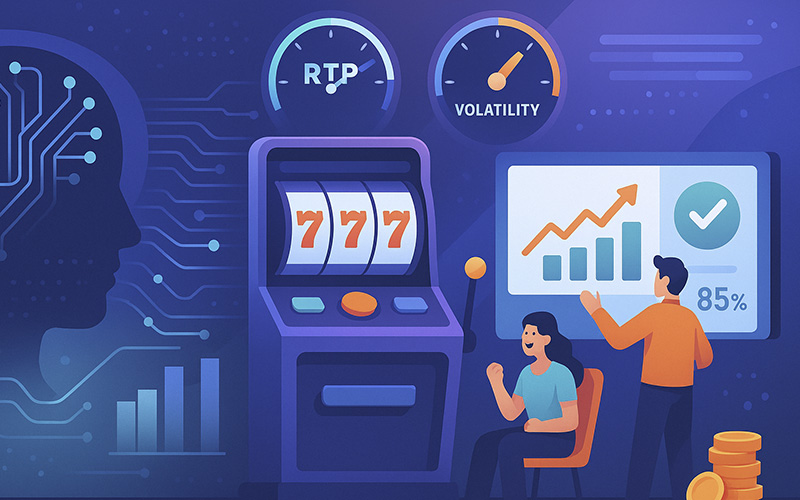
Earlier works mainly examined what the screen shows. The newer study explored whether learned meaning could modify the way a person visually processes the same event.
The central hypothesis connected attentional bias with verbal associations. Participants who connected a near miss with a clear loss were expected to show less interest in the relevant symbol. The comparison condition linked the display with being close to success and was predicted to remain more visually engaged.
This distinction is critical since the actual mathematics never changed. Each simulated spin had the same objective status before and after the learning task. Only the mental category attached to the display was altered.
A university sample included recreational gamblers from the surrounding community. People with problem gambling were screened out, so the participants do not represent every casino audience.
Elements the setup included:
- 24 adult participants;
- two groups of 12;
- simulated slot outcomes;
- eye-tracking equipment;
- testing before and after training;
- no participation incentive.
Both groups completed a relational learning task. One condition connected near-miss images with the label loss. The other associated the same type of display with the concept “almost”.
Every participant reached the required accuracy threshold during training. Gaze behaviour was then assessed through two measures. Direction bias counted movements towards the relevant offset symbol, while duration bias recorded the time spent looking at that area.
Loss Label Behaviour
The first intervention made the objective result more explicit. Participants learned to place almost-winning imagery in the same category as an ordinary unsuccessful outcome.
Visual interest fell clearly after that exercise. Average directional movements towards the target symbol dropped from 11.25 to 6 out of 36 possible trials. This equals a reduction of about 47%, so the group looked towards the relevant area almost half as often.
Fixation time showed a similar change. The mean duration declined from 646.17 milliseconds to 450.75 milliseconds. That shift represents a decrease of roughly 30%.
These figures indicate weaker attentional capture and shorter maintenance. The screen remained identical, but the learned interpretation reduced its ability to hold the eye.
Almost Label Behaviour
The second condition strengthened the association with proximity to success. Participants learned to classify the same losing pattern as an “almost” result.
Average directional movements rose from 10.17 to 14.17. The increase was approximately 39%. Gaze duration moved from 489.25 milliseconds to 760.25 milliseconds. This change equals about 55%, which indicates that the key area held visual focus for much longer after training.
The outcome did not become more valuable. No payout was added, and no future probability improved. The learned frame simply made the visual cue more effective at attention capture.
Key Findings
The experiment demonstrates that attentional responses can be modified. It does not prove that a short message will always lengthen a real-money session or raise revenue.
Only 24 recreational gamblers took part. The laboratory environment used simulated outcomes, and participants did not receive financial incentives. The authors also noted that heavier users may respond differently because stronger existing associations could be harder to change.
Another limitation concerns behaviour. Eye tracking records where a person looks and for how long. It cannot independently reveal satisfaction, frustration, or an intention to deposit again. The safest conclusion is narrow. Learned language influenced visual engagement with near-miss imagery under controlled conditions.
Relevant Data for Operators
The study still offers useful guidance for game reviews. Teams can use it to examine how layout and language work together across the player journey.
Separate Similar-Looking Outcomes
A general near-miss category may conceal meaningful differences. Product specialists should map where the blocking symbol appears and when the player can identify the final result. This review should include the animation sequence and the payline position. It can then compare attention statistics with session feedback to identify formats that create unnecessary tension.
Interpret Gaze in Context
Longer focus may appear positive on a dashboard. That metric may also reflect confusion or irritation. Eye movement should therefore be studied alongside a second indicator. Useful pairings include voluntary continuation and direct satisfaction ratings. This approach gives the team a clearer view of whether engagement supports a healthy experience.
Review Frequency across the Session
One isolated display may have little impact. Repetition can change the overall rhythm and make a game more frustrating. Operators should assess how often these outcomes appear during realistic play. The UK Gambling Commission prohibits features that mislead customers about the likelihood of particular results. Its standards also prevent one losing event from being replaced with a false near-miss display.
Communication into Expectations
Associations can form before the first spin. Advertising, onboarding, and help content may all influence how users classify a close-looking loss.
Every communication layer needs a clear boundary. A brand should never imply that visual proximity predicts an approaching payout because independent slot outcomes provide no such information.
Areas worth particular attention:
- Acquisition campaigns. Creative materials should present entertainment features accurately and avoid any implication that repeated near-wins show progress towards a prize.
- New-user guidance. Introductory content can explain that every unsuccessful combination remains a loss. This message may reduce mistaken beliefs before they become established.
- Game information. Help pages should describe random outcomes in plain language. Clear wording can support better understanding with the full structure preservation of the interface.
- Retention messages. Reactivation content should avoid references to unfinished luck or a prize that is supposedly due. Such claims can encourage loss chasing and create regulatory exposure.
The 2025 study identifies education as a possible intervention. Its authors proposed mental relabelling of near misses as losses for treatment and prevention settings. This application moves in the opposite direction from campaigns that describe failure as an opportunity.
The Commercial and the Ethical Limit

A 40% rise in eye movements and a 55% increase in fixation time may appear attractive to a retention team. These figures require careful interpretation because they were measured in a small controlled experiment.
The use of similar framing to intensify play creates a direct risk. A person may begin to treat losing feedback as encouragement, even though the underlying chance remains unchanged. The concern becomes stronger for vulnerable users. Near misses already capture attention, and prior research links them with increased motivation to continue gambling. Reinforcing that effect through marketing could deepen harmful behaviour.
Responsible development therefore protects both the audience and the operator. Misleading messages can weaken trust and attract regulatory scrutiny. Clear explanations support a more sustainable relationship with users.
Responsible Testing Framework
Operators can still learn from the research and ensure loss-based cues are not turned into a promotional tool. The responsible approach begins with accurate measurement and strict safeguards.
A balanced review can follow five steps:
- Identify every near-miss pattern. Record symbol order and payline position for each relevant configuration. This map will show whether several psychologically distinct events are grouped together.
- Compare attention with sentiment. Pair gaze statistics with frustration scores or voluntary continuation. The combination can separate healthy interest from uncomfortable pressure.
- Check all surrounding languages. Review advertising and onboarding copy for claims that present close-looking losses as evidence of progress. Remove any wording that connects one result with the next spin.
- Study repeated exposure. Test realistic sessions and track whether irritation grows over time. A sequence that performs well in isolation may weaken the complete product impression.
- Include safer gambling specialists. Behavioural experiments should receive a harm review before release. Teams also need clear rules for excluding at-risk segments from persuasive testing.
This framework treats the mechanic as a research subject. It also keeps commercial goals within fair product boundaries.
The Main Things about Close-Looking Slot Losses
These outcomes combine visual design and learned interpretation. The latest evidence shows that language can change attention even when symbols and payout rules stay fixed.
The central points for operators:
- Similar losing sequences can create different reactions because reel timing changes when certainty arrives.
- Training with the loss category reduced directional attention by about 47% and cut gaze duration by roughly 30%.
- The almost association increased eye movements by close to 40% and extended fixation time by approximately 55%.
- The experiment measured visual bias among 24 recreational gamblers, so it does not establish a guaranteed commercial effect.
- Accurate communication should reinforce the independence of each spin and avoid presenting failure as progress.
Near misses can help teams understand how perception develops around slot content, but the strongest application is clearer design and better player protection.

Check the information used to contact us carefully. It is necessary for your safety.
Fraudsters can use contacts that look like ours to scam customers. Therefore, we ask you to enter only the addresses that are indicated on our official website.
Be careful! Our team is not responsible for the activities of persons using similar contact details.