Casino Configurator
Nigeria Gambling Licence Guide 2026
This fast-growing West African country combines a large audience, widespread digital access, and a mature sports betting culture. The Nigerian Communications Commission recorded about 139.3 million active internet subscriptions at the end of 2024. These conditions support mobile casino and sportsbook products that depend on fast deposits, simple registration, and reliable payouts.
The legal environment is less straightforward. Companies must choose between a multi-state route coordinated through the Federation of State Gaming Regulators of Nigeria and a separate permit issued for the Federal Capital Territory. Each path has its own geographic coverage, cost structure, capital threshold, tax base, and approval procedure.
This decision should come before platform configuration or marketing preparation. A licence designed for Abuja does not automatically cover Lagos or other states, while participation in a reciprocal framework still requires careful confirmation of the territories included.
Changes in Gambling Regulation

The current structure developed after a major Supreme Court decision on 22 November 2024. The judgment declared the National Lottery Act invalid across Nigeria’s 36 states because the genre and gaming fall within residual matters reserved for state governments. The National Assembly retained legislative authority for the Federal Capital Territory.
This outcome ended the previous assumption that one national permit could provide legal access throughout the country. State authorities received clearer control over gambling activity inside their borders, while the FCT continued under a separate territorial framework.
The decision also created a problem for digital businesses. An online brand can reach customers across multiple locations through a single website, although each participating jurisdiction may have distinct rules. Separate applications across many regions would increase costs, reporting duties, and administrative work.
FSGRN developed the Universal Reciprocity Licensing regime to reduce this duplication. Its framework allows participating states to recognise a shared approval and preserve each authority’s constitutional powers. Representatives from 24 member states attended the federation’s meeting following the Supreme Court ruling, and membership has since been reported at up to 25 states.
FSGRN as the Multi-State Route
This pathway is intended for online casino, sportsbook, lottery, and related companies that seek wider territorial recognition. Successful applicants receive a Universal Reciprocity Certificate, which provides access to participating jurisdictions under a coordinated system.
The certificate is commonly described as a single multi-state approval, although it should never be treated as unrestricted national permission. Membership can change, and some parts of Nigeria may maintain separate controls or prohibit gambling activities. Operators must confirm the current participating territories before they accept registrations or run advertising campaigns.
FSGRN also separates gambling categories. A business that provides sports betting and casino games may need approval for both verticals, with an individual annual payment attached to each one.
Current Financial Thresholds
The multi-state framework sets a high entry level because the holder may serve customers across a broad geographic area. A 2026 legal guide lists a $3K non-refundable application payment, $20K minimum share capital, and a $20K bank guarantee from an acceptable financial institution.
These amounts have different purposes. Registered capital shows that the company has an adequate corporate base, while the guarantee protects regulatory and customer interests if the business cannot meet its obligations. Neither item should be confused with the licence charge itself.
Some recent guides still mention a $30K combined payment for sports betting and casino operations, together with a 10% GGR levy. This conflict shows how quickly Nigerian rules continue to develop. Applicants should receive a written tariff from FSGRN before they opt to transfer funds or finalise their financial model.
Annual Validity
The reciprocal approval operates on a one-year cycle. Renewal creates a recurring cost that becomes especially important for companies holding several categories.
A casino and sportsbook brand may face two category payments every year. This structure can become expensive, although the broader geographic reach may justify it for businesses with strong acquisition capacity and sufficient operating reserves.
FCT-LRO for Abuja-Based Operations
Companies that plan to serve the Federal Capital Territory can apply through the FCT Lottery Regulatory Office. This authority oversees online and retail casino games, sports betting, lotteries, interactive products, promotional schemes, and emerging formats within Abuja.
The territorial pathway has a lower immediate capital requirement and a longer validity period. It also limits geographic coverage, so the permit should not be presented as permission to target users throughout Nigeria.
Official FCT-LRO requirements establish a $1.5K non-refundable application and processing charge. The applicant company must maintain at least $20K in share capital and pay a $72K casino permit fee after document review. The approval remains valid for five years.
A bank guarantee of at least $18K is also required and must remain valid for no less than one year. This financial security sits outside the permit price and should be included separately in the entry budget.
Staged Approval Procedure
The territorial process includes an initial review, provisional acceptance, and a substantive permit. FCT-LRO states that application assessment takes 10 working days, although this period covers the review of submitted materials and does not represent the complete launch timeline. After provisional acceptance, the company has up to 90 days to meet the remaining conditions. Failure to complete them can void the request.
The final stage may involve several operational checks:
- office and data-centre inspection;
- monitoring-platform connection;
- website and promotional review;
- third-party service agreements;
- technical-provider undertakings;
- permit fee payment;
- regulatory terms execution;
- platform readiness demonstration.
A well-prepared business can progress efficiently, but incomplete supplier contracts or missing technical certificates may extend the schedule.
Real Cost of Market Entry
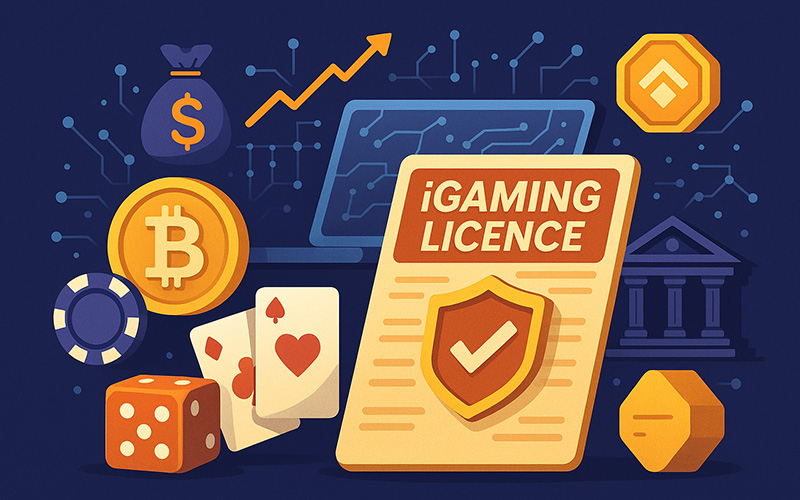
A committed applicant must fund the corporate, legal, technological, and operational layers that support approval and future activity.
The main cost categories:
- application and processing payments;
- licence or permit charge;
- registered share capital;
- bank guarantee;
- Nigerian company formation;
- legal and regulatory support;
- platform testing and certification;
- monitoring-system integration;
- local office and personnel;
- payment-provider connection;
- compliance software;
- annual renewal expenses.
Registered capital usually stays inside the corporate structure, while a guarantee may restrict access to part of the available funds. Direct charges are paid to the authority and generally cannot be recovered.
Operators should keep all planning figures in naira. Dollar equivalents can help international investors compare jurisdictions, but currency movements may make them inaccurate by the payment date.
The FCT route can appear cheaper because the $72K casino permit lasts five years. FSGRN also applies a $72K category charge under the current tariff, although this amount is due annually. Geographic reach and renewal frequency therefore matter as much as the initial number.
Taxes and Continuing Payments
The two systems calculate gaming-related remittances through different bases. A percentage of GGR cannot be compared directly with the same percentage of turnover because each model starts from another figure.
The principal obligations:
- FSGRN uses a GGR-based charge. The reported 2026 framework applies an 11% Good Causes contribution to gross gaming revenue, which normally represents stakes after player winnings have been deducted.
- FCT-LRO uses monthly sales turnover. Permit holders must pay 3% of gross monthly sales by the tenth day of the following month.
- Corporate obligations remain separate. A gaming-specific levy does not remove company taxation, payroll duties, withholding requirements, or other payments created by Nigerian law.
- Monthly reconciliation is essential. Finance teams need accurate records of stakes, payouts, cancelled transactions, bonuses, and supplier deductions to calculate the correct amount.
- Audits continue after approval. FCT-LRO requires monthly reports and conducts system checks every quarter.
The difference between turnover and GGR can materially change profitability. Consider a platform that records $350K in stakes and pays $320K back to customers. Its GGR is $30K. A 3% turnover payment equals $10.5K, while an 11% GGR charge equals $3.3K.
This simple example does not include corporate tax, bonuses, payment fees, game-provider costs, or operating expenses. It shows why the lower percentage can still create the heavier burden.
Application Process from Incorporation to Launch
Licensing begins with the company structure and ends only after regulatory, financial, and technical conditions have been satisfied. Preparing the platform before the legal route is clear can lead to costly changes.
A strong sequence to follow:
- Select the required geographic coverage. The business must identify whether it needs access to several participating states, Abuja alone, or a combination of separate local permissions.
- Register a suitable Nigerian company. Corporate objects should cover casino games, betting, lotteries, technology services, and related commercial activities where relevant.
- Align ownership and capital records. Shareholder information, director profiles, registered capital, and Corporate Affairs Commission documents must match every statement in the application.
- Prepare a detailed business plan. Regulators expect market analysis, distribution strategy, operating structure, five-year projections, funding evidence, and clear revenue assumptions.
- Build the compliance package. KYC, AML, responsible gaming, data security, record retention, complaints, and suspicious transaction procedures should already exist in written form.
- Collect supplier documentation. Platform contracts, hosting arrangements, payment agreements, game-provider relationships, and service-level commitments may all require review.
- Submit technical evidence. Authorities can request system architecture, database details, firewall controls, backup arrangements, quality assurance documents, and certification from a recognised testing laboratory.
- Complete due diligence and inspections. FSGRN review takes at least 15 working days after a complete filing, while FCT-LRO uses an initial assessment followed by provisional conditions.
- Connect reporting systems and receive final approval. The operator should go live only after all required monitoring, inspection, financial, and contractual steps have been completed.
A regulator may ask for extra evidence at any stage. The fastest application is usually the one that answers financial, technical, and ownership questions before they are raised.
Conditions for Foreign-Owned Companies
International investment is possible, but a foreign structure creates additional corporate and immigration work. The operator cannot depend on an offshore entity alone when the chosen route requires a locally incorporated applicant.
Supplementary documentation:
- Nigerian corporate vehicle;
- local directors;
- beneficial ownership details;
- NIPC investment certificate;
- business permit or quota;
- residence and work authorisation;
- foreign funding records;
- local tax documentation;
- management profiles.
FCT-LRO specifically requests the company’s business quota, residence or work permits for foreign directors, and an investment certificate from the Nigerian Investment Promotion Commission during provisional approval.
AML, KYC, and Technical Compliance
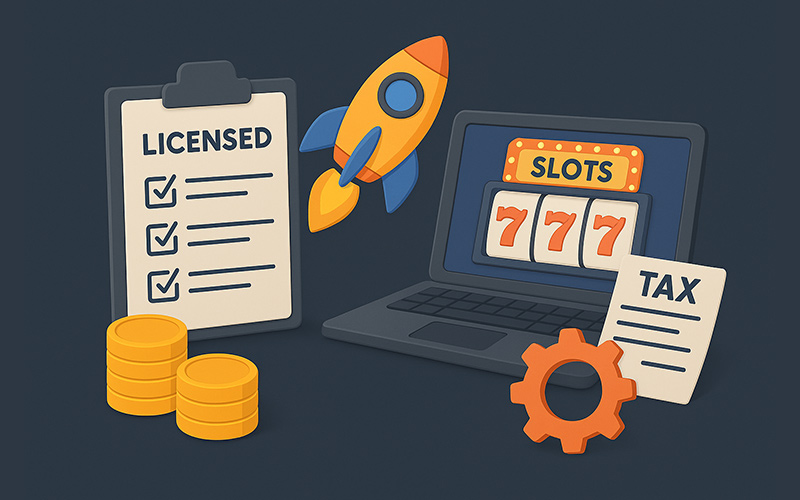
Financial strength will not secure a permit when the control environment is weak. Nigerian authorities examine whether the applicant can verify users, trace transactions, protect data, identify unusual behaviour, and meet reporting deadlines.
SCUML Registration
Casino and betting businesses fall within sectors supervised by the Special Control Unit Against Money Laundering. Both main routes require evidence of SCUML registration as part of the application package.
This procedure is free when completed through the official portal. It should be handled early because regulators, banks, and payment partners may request the certificate.
Formal registration must be supported by working internal controls. These normally cover customer identification, enhanced checks for higher-risk cases, suspicious activity escalation, staff education, transaction monitoring, and document storage.
Platform Documentation
FCT-LRO asks for information on servers, cloud services, databases, backups, routers, firewalls, security features, redundancy, and the full technical flow. The authority also reviews provider profiles, service agreements, contact details, and software certification.
These requirements affect the choice of technology partner. A supplier should be able to provide system diagrams, integration records, testing evidence, and operational support during inspection.
Continuous Oversight
The compliance relationship continues after launch. Monthly reporting, quarterly audits, monitoring connections, and financial reconciliation require reliable back-office tools.
Manual spreadsheets can create mismatched numbers and missed deadlines as activity grows. Automated reports, role-based access, complete transaction histories, and clear audit logs make the operation easier to manage.
Different Routes for Unique Business Models
The right approval depends on commercial reach, available capital, renewal planning, and the location of the intended audience. A lower entry threshold may offer limited expansion room, while broad access can bring heavier annual costs.
The typical operator profiles:
- A multi-state online brand may prefer FSGRN. The reciprocal certificate reduces repeated applications across participating jurisdictions and supports wider digital distribution.
- An Abuja-first project may choose FCT-LRO. Its five-year casino permit provides a longer operating period and a lower share-capital threshold.
- A casino and sportsbook business must assess category costs carefully. FSGRN applies separate payments to each activity under the 2026 tariff, which can significantly increase the annual budget.
- A foreign investor needs extra preparation. Local governance, immigration approvals, investment registration, and ownership transparency should be resolved before filing.
- A lightly funded startup may struggle under either framework. Licence payments, guarantees, technology, marketing, and operating reserves create a substantial combined threshold.
Underestimated Risks
The first danger is when operators assume that one approval covers the entire country. Nigeria has a state-led structure, and territorial authority remains central after the 2024 Supreme Court judgment. A company can face enforcement or tax exposure when it accepts users from places outside its recognised scope.
Another issue comes from confusing turnover with GGR. The FCT percentage looks smaller, but the calculation begins with all sales. High payout ratios can make its real impact much greater than expected.
Bank guarantees are also frequently misunderstood. They are financial security instruments and can affect liquidity even though they are not the same as direct regulatory charges.
Technical preparation creates one more challenge. Operators sometimes treat compliance as paperwork that can be added near launch. Nigerian authorities request detailed architecture, supplier agreements, security information, testing certificates, and monitoring connections, so these features must be built into the project from the beginning.
The Main Things about Nigerian Gambling Licences
Nigeria provides access to a large digital audience, although its legal structure demands careful preparation. Companies should assess geographic reach, recurring payments, tax calculation, and operational readiness as one connected decision.
Key nuances to keep in mind:
- Nigeria uses state-led gaming control outside the Federal Capital Territory, while Abuja has a separate territorial framework.
- FSGRN supports wider access through reciprocal recognition among participating state authorities.
- FCT-LRO offers a five-year casino permit with lower capital and guarantee requirements, but its geographic scope remains limited.
- The real entry budget includes licence charges, capital, guarantees, certification, technology, staffing, AML systems, and continuing reports.
- The strongest applicants prepare corporate, financial, and technical documentation before they submit the first regulatory form.
Nigeria has deliberately created a demanding entry process that filters out companies without sufficient resources or compliance discipline. Operators that pass this stage receive access to a strong mobile market with established digital payment habits and substantial room for long-term growth. Order a turnkey casino platform, game integrations, and technical support from Gaminator to build a Nigerian gambling project around your selected licensing route.

Check the information used to contact us carefully. It is necessary for your safety.
Fraudsters can use contacts that look like ours to scam customers. Therefore, we ask you to enter only the addresses that are indicated on our official website.
Be careful! Our team is not responsible for the activities of persons using similar contact details.