Casino Configurator
White Label vs Custom Build vs Turnkey: Which iGaming Model Brings More Revenue
Operators usually spend months refining the visible side of the business. They adjust acquisition channels, rethink retention, test bonus structures, and build stronger teams. Yet one decision sits underneath all of that and shapes the result more than many expect.
The model behind the platform affects how much control you retain, how quickly you can move, and how much of your income stays within the company. A low-cost start can create expensive long-term obligations. Full ownership can also become a constant drain if the technical side consumes too much time and money. That is why the real comparison is about which one still makes sense when the operation grows.
If you are choosing between White Label, custom build, and turnkey, you need to look beyond vendor claims and focus on economics, flexibility, and long-term implications. The Gaminator’s team explores these strategies and helps you choose the one that matches your budget, plans, and growth pace.
Importance of the Model Choice
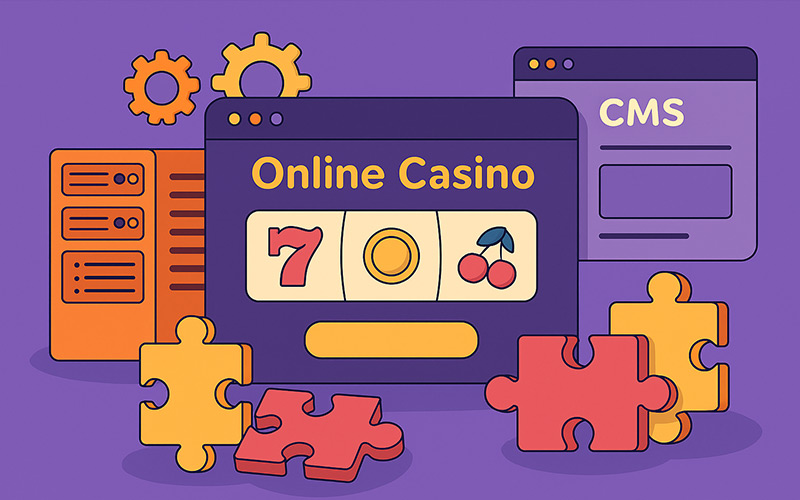
Many operators treat platform selection as a speed issue. They want to know how fast they can go live, how much they need to spend at the start, and who will handle the technical side. These questions matter, but they do not show the full picture.
The real impact appears later. Once traffic starts coming in, the business begins to feel the consequences of the chosen structure. In one case, revenue share begins to erode margin. In another, internal teams keep funding a platform that never stops needing updates. In a third, the operator gets a more balanced setup but still needs to take responsibility for licensing, compliance, and market strategy.
That is why the right question asks what kind of business this model will allow you to run six months, one year, or three years from now.
White Label
For newcomers, market tests, or lean teams, this route often looks like the easiest way in. The White Label launch can happen quickly since the technical base is already in place, and much of the infrastructure sits on the provider’s side. That makes the format attractive when speed matters more than deep product control.
There is a reason many first projects start here. The initial barrier is lower, the setup is familiar, and the operator can focus on branding, traffic, and early validation rather than on engineering tasks.
The main benefits and the pressure points:
- low entry threshold;
- fast go-live;
- outsourced infrastructure;
- recurring revenue share;
- restricted product freedom;
- limited roadmap influence.
The trade-offs may feel manageable at the beginning. Problems usually appear when the business starts producing stronger numbers. A revenue share of 10% to 30% of NGR may appear manageable at modest volumes, but the impact becomes more significant as the project grows. At $500,000 NGR, the outflow is already substantial. At $3 million, the monthly cost requires careful consideration.
The issue becomes even sharper when this cost sits alongside everything else. Payment providers take their part. Affiliates take theirs. Game fees still need to be covered. Traffic remains expensive. As a result, a business that looks healthy on paper may find that too much revenue is distributed across third parties before meaningful profit accumulates.
This is why White Label works best for smaller-scale launches, short validation cycles, or teams that prioritise speed over long-term flexibility. Once the casino gains scale, the structure that enabled a fast start can become a constraint on growth.
Custom Build
For operators who want maximum independence, the from-scratch development can seem like the most logical answer. This approach gives the business direct control over the product, the feature queue, and the technical direction. Nothing depends on another company’s roadmap. That level of authority is attractive, especially for firms with unique requirements or a long-term expansion plan.
Full ownership also means full responsibility. The product becomes yours, but so do the cost layers, delays, maintenance demands, and technical risks that come with it.
Custom development appears attractive because it offers complete product independence. In practice, the financial commitment is considerably larger than most teams anticipate.
The main cost layers:
- Initial development budget. A full platform can require $500,000 or more before anything reaches the market. More complex projects can push that figure much higher, especially when extra integrations and compliance demands are involved.
- Long delivery timeline. A 12-month runway before launch is not unusual. That means a year of spending before the brand begins to earn back the investment.
- Ongoing technical upkeep. Annual maintenance often reaches 15% to 25% of the original build cost. A $1 million product can therefore need $150,000 to $250,000 every year simply to stay current and functional.
- Compliance and operational support. The system still needs updates, fixes, monitoring, and legal adaptation. These tasks do not disappear once the product goes live.
- Management focus. Leadership attention starts shifting towards engineering issues, vendor coordination, and platform stability. At that stage, the technology can start consuming more resources than the business generates.
There are operators for whom this burden is justified. Large groups with deep budgets, strong in-house expertise, and highly specific product goals may benefit from complete control. The same is true for businesses that cannot find a market solution that can handle their structure, geography, or long-term plans.
For everyone else, the danger is simple. What begins as a platform project can evolve into a substantial internal engineering operation that competes for resources with the core business. That is a heavy commitment for a team whose main goal is to operate and grow an iGaming brand.
Turnkey Strategy

Between the low-entry convenience of White Label and the full technical ownership of custom development sits a third route that many operators find more practical. This model keeps the technology on the provider’s side, but it does not lock the operator into the same level of dependency that White Label usually creates.
The setup tends to work best when both sides focus on the same commercial result. The provider handles the platform, infrastructure, and game integrations. The operator keeps responsibility for licensing, marketing, and region-specific compliance. That division creates a structure in which each party focuses on its strongest area.
Core turnkey advantages:
- moderate upfront spending;
- faster market entry;
- shared technical burden;
- better room for scaling;
- more flexible feature support;
- operator-led licensing strategy.
This balance matters because growth rarely depends on software alone. A casino also needs market knowledge, local compliance handling, acquisition strategy, and commercial discipline. In a turnkey model, the operator does not pay for a full-service wrapper, unlike in White Label. At the same time, the team is not forced to build and maintain the whole system from scratch.
That combination can be useful for experienced operators who want more freedom without taking on a full engineering burden. It can also suit newcomers who need the technical side covered early so that the path to break-even is more predictable. Instead of carrying the cost of a custom build or surrendering too much margin in a White Label deal, the business gets a more measured structure.
Another advantage appears in responsiveness. When the provider’s role depends on the operator’s performance, feature work and integration requests tend to matter more. That can create a healthier working relationship than a model in which the platform side has less incentive to adapt quickly.
Operational Questions that Decide the Outcome
A simple comparison often reveals more than a long pitch deck. When operators place all three formats next to each other, the practical differences become easier to read.
The most useful way to judge them is through relevant business questions:
- How much do you pay upfront? White Label usually has the lowest entry cost ($30K–$50K). Custom build sits at the opposite end ($500K–$1M). Turnkey tends to land in the middle with a more moderate initial requirement ($150K–$300K).
- What happens to revenue over time? White Label often comes with high ongoing sharing. Custom build avoids that, but only after a large upfront commitment. Turnkey usually introduces a more structured and balanced commercial model.
- How fast can you enter the market? White Label and turnkey are both built for speed and can go live in a few weeks. A fully bespoke product usually needs a much longer runway before launch (up to a year).
- Who carries the maintenance load? In a White Label deal, much of that burden stays outside the operator’s team. With a custom platform, the responsibility becomes internal and constant. Turnkey tends to split the pressure more reasonably.
- How much control do you keep as the business expands? White Label offers less room for deep changes. Custom development gives full authority. Turnkey usually provides a more flexible middle ground.
This is where the decision becomes clearer. The correct selection depends on whether the operator values speed, independence, lower early spending, or a better balance between technical support and commercial freedom.
Which Setup Fits Your Profile
No single route is perfect for everyone. The better choice depends on capital, experience, and the stage of the business.
Common operator profiles:
- New entrant testing a niche or GEO. A team in this position often wants speed, lower entry pressure, and a simple way to validate demand. White Label may look attractive here, though the operator should understand that the long-term margin picture can become much less appealing once growth begins.
- Established group with unique product requirements. A larger business may need full ownership, deeper control, and a platform designed around its own logic. In that case, custom development can be justified, provided the organisation is ready to bear the costs, time, and ongoing technical commitment.
- Growth-focused operator looking for balance. This profile usually wants faster execution than a bespoke build can offer, but more strategic space than a White Label setup allows. Turnkey is often the most practical answer for this kind of expansion plan.
The key is to match the model to the actual business. Some teams select a level of independence they are not yet equipped to use effectively. Others choose convenience and later find that the ongoing cost outweighs the initial benefit. A good decision starts with an honest view of the operator’s size, experience, and commercial goals.
The Cost Curve
The difficulty with this choice is that the trade-offs are not always visible early. Many of them stay hidden during the early stage. The launch works, the team gets busy, and the first numbers look promising. The compounding effect typically becomes apparent only after the operation has scaled.
This is especially relevant in competitive GEOs where acquisition costs can exceed $200 per depositor. When traffic is that expensive, every additional layer of platform cost has a greater impact. The pace of technical change becomes more critical. Limited control becomes a more tangible constraint. Annual maintenance is harder to absorb. Revenue share applies more pressure.
Ultimately, every model is evaluated by how much revenue remains inside the business, and how efficiently the platform supports the operator in reaching that outcome.
That is why strategy selection should never be treated as a minor technical issue. It is a commercial decision with long-term consequences. The choice of model determines how the business manages cost, operational control, and growth capacity over time.
The Main Things about Casino Solutions
The right model is not always the cheapest or the fastest one. A stronger choice matches operator’s present needs and does not damage your future margin, flexibility, or pace of expansion.
Key aspects to keep in mind about different strategies:
- White Label helps operators launch quickly, but recurring revenue share can become a major burden as NGR grows.
- Custom build gives full control, yet it demands major capital, a long runway, and constant technical upkeep.
- Turnkey offers a middle route where the provider covers the platform side while the operator keeps strategic responsibility for growth and market execution.
- The best comparison is about control, scalability, and how much revenue remains in the business later.
- Operators should choose a structure that supports their real stage, budget, and long-term objectives rather than the most attractive short-term promise.

Check the information used to contact us carefully. It is necessary for your safety.
Fraudsters can use contacts that look like ours to scam customers. Therefore, we ask you to enter only the addresses that are indicated on our official website.
Be careful! Our team is not responsible for the activities of persons using similar contact details.