Casino Configurator
AI Agents in Online Casinos: How Smart Automation Will Change iGaming Operations
The discussion around artificial intelligence has already moved past simple text generation. The next step is agent-based automation that can analyse data, prepare actions, connect tools, and support teams across several workflows.
This shift matters for iGaming because casino platforms already depend on speed, accuracy, personalisation, risk control, and constant availability. A small delay in customer support can cost a player. A weak fraud check can damage the balance sheet. A poorly timed bonus can waste the marketing budget. AI agents can help operators deal with these points faster, provided the technology is built into a safe and well-managed platform.
AI Agents for Casino Operators
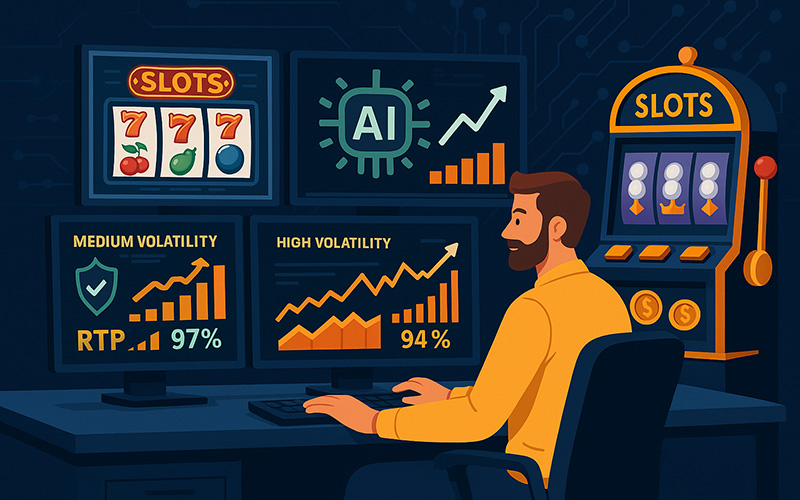
Agent-based systems are different from ordinary chatbots or content tools. The first answers questions; the second creates text or images. An AI agent can follow a goal, collect information, choose the next action, use connected systems, and prepare a result for a human manager or another workflow.
For casino businesses, this can turn a static platform into an adaptive environment. The agent can monitor player activity, compare results, identify issues, and trigger a task within approved limits.
Key roles they can fill:
- Analysis. An agent can review support chats, transaction patterns, player behaviour, bonus performance, and website data. This helps teams see problems earlier and spend less time on manual checks.
- Decision support. The system can turn a large amount of information into practical recommendations. For example, it can show which bonus group performs poorly, which traffic source brings risky users, or which support topic creates the longest queues.
- Task execution. Connected tools can prepare reports, update tickets, draft campaign materials, flag suspicious actions, and route cases to the correct department. Human approval should still stay in place when money, personal data, or compliance are involved.
Usage in Online Casinos
Gambling platform teams will not feel the impact in one department only. The technology can support several business areas at once, although each use case needs its own rules and limits.
Customer Support
Service teams are one of the clearest areas for early adoption. AI agents can scan the casino’s terms, bonus rules, payment conditions, and verification policy, then help support staff answer routine questions faster.
The human team will not disappear. Complex complaints, VIP cases, payment disputes, and responsible gambling situations still need people with judgement and authority. The benefit lies in speed and consistency. A well-trained agent can prepare an accurate answer, attach the relevant policy, and pass the case to an operator in seconds.
Personalised Advertising
Promotions often lose efficiency because they are too broad. A welcome offer, a reload bonus, or free spins may reach thousands of players, but only part of that audience will find the deal relevant.
AI agents can review player groups and help CRM teams match offers with actual behaviour. A slot-focused user may receive a different reward than a live casino regular. A dormant player may need a soft return offer. A high-risk user should receive extra protection, not heavier stimulation.
Bonus Planning
Bonus design is another area where agents can save time. The system can compare historical campaigns, check wagering results, review cost per acquisition, and suggest structures that match business goals.
For example, an agent can help identify which offer attracts first deposits but fails to create long-term activity. It can also show when a campaign brings too many bonus hunters or raises fraud risk.
Marketing Automation
Promotional teams in iGaming move under constant pressure. They need landing pages, newsletters, affiliate materials, social media posts, SEO briefs, banners, push notifications, and local adaptations.
AI agents can support this workflow by creating drafts, checking keyword logic, adapting campaign messages, and preparing content packages for several markets. Organisations commonly use AI in marketing and sales, customer service, knowledge management, and information delivery. These areas match the daily needs of casino managers almost perfectly.
Fraud Detection and Payment Control
Risk teams may benefit from agent-based monitoring because fraud rarely manifests as a single obvious action. It often appears as a pattern across registrations, payment methods, device data, bonus use, withdrawals, and account behaviour.
An AI agent can flag unusual links between accounts, repeated withdrawal attempts, bonus abuse, suspicious payment timing, or behaviour that differs from normal user activity. The global average data breach cost reached $4.88 million. That figure underlines why, for casino operators, automation around security and monitoring cannot be treated as a minor backend feature. AI tools will not remove fraud risk completely. They can help teams detect it earlier, reduce manual pressure, and create a clearer audit trail.
AI Agents Benefits
The appeal is easy to understand. Casino businesses run nonstop, and many workflows repeat every day. When those tasks become faster and more accurate, the whole operation becomes easier to scale.
The main operational gains:
- lower routine workload;
- faster customer replies;
- more stable support coverage;
- smarter use of player data;
- better fraud monitoring;
- faster marketing cycles;
- more consistent internal reporting.
For new operators, the most important benefit may be efficiency. A smaller team can manage more processes and keep full control. For growing brands, the value comes from scale. Extra users, markets, and campaigns no longer require the same level of manual expansion.
There is also a strategic benefit. Agents can help managers see what happens inside the platform more clearly. They can connect signals from payment flows, CRM, support, and gameplay data, which makes decision-making more grounded.
First Results
Players will usually notice the effect through the interface and service quality. The first visible change may be faster support. A user who asks about a withdrawal, bonus condition, or verification step may get a clear answer with less waiting.
The second change may come from more relevant offers. A player who prefers live tables should not receive a constant stream of slot-only promotions. A casual user should not be pushed towards complex VIP mechanics. Better segmentation can make the experience feel more natural.
The third change is smoother administration. Verification reminders, payment status updates, bonus instructions, and account information can become clearer when agent-based tools support the back office.
Trust remains central. If users feel that decisions are unclear, too aggressive, or unfair, automation will damage the brand. A faster process only helps when it is also transparent and responsible.
Risks to Consider
Agent-based automation creates real opportunities, but it also adds new liabilities. Casino operators work with money, identity data, payment details, and sensitive behavioural signals, so careless AI integration can create serious problems.
The most important risk areas:
- Privacy and data use. Agents need information to work well, but broad access can become dangerous. Operators should limit what each system can see and define which data can be used for support, marketing, risk, or reporting.
- Over-personalisation. A promotion engine that only chases engagement can become harmful. Responsible gambling logic must shape the limits of every personalised workflow.
- Reduced human oversight. Teams may start approving machine-prepared actions too quickly. This can turn one small error into a platform-wide issue.
- Compliance pressure. The EU AI Act entered into force on 1 August 2024 and is scheduled to become fully applicable on 2 August 2026, with several staged exceptions. Operators that use AI in Europe need to monitor how transparency, governance, and risk obligations affect their workflows.
- Security weaknesses. OWASP lists risks such as prompt injection, insecure output handling, sensitive information disclosure, excessive agency, and overreliance in large language model applications. These categories are highly relevant for casino platforms that connect AI tools to payments, support, bonuses, or admin panels.
Responsible Use
A mature approach starts with governance. The operator must know what the agent can do, what data it can access, which systems it can affect, and when a human must approve the next step.
Safe implementation model:
- clear human approval stages;
- limited access to sensitive data;
- transparent bonus rules;
- audit logs for automated decisions;
- responsible gambling filters;
- regular security checks;
- separate permissions for each workflow.
The best structure is gradual. A casino can begin with low-risk areas such as internal reports, support drafts, and campaign preparation. Once the team understands the tool’s accuracy and limitations, it can move towards deeper integrations.
This also makes staff training important. Employees should know when they can rely on an agent, when they must check its output, and when the task should move to a manager, compliance officer, or risk specialist.
Agent-based casinos will not appear as a completely separate category overnight. The change will be more practical. Existing platforms will add smarter layers to the back office, support desk, CRM, fraud system, and marketing stack.
The strongest brands will use AI agents as operational infrastructure. The technology will help them work faster, reduce repetitive tasks, and see patterns earlier. It will not replace platform strategy, legal understanding, product vision, or human responsibility.
This distinction matters because the iGaming market already has plenty of weak automation. Basic chatbots, generic bonus tools, and template marketing flows do not create a lasting edge. AI agents can become more valuable because they act across workflows, but only when the underlying platform has clean data, stable integrations, and clear control logic.
Preparation Routine

AI agents need a strong technical foundation. A weak platform will not become intelligent because a new tool is attached to it. The casino must already have structured data, stable payment flows, flexible bonus settings, reporting logic, security layers, and back-office visibility.
What a platform needs before adopting agent-based tools:
- stable integrations;
- structured player data;
- flexible bonus management;
- secure payment workflows;
- scalable support systems;
- risk monitoring tools;
- clear operational control.
Gaminator helps operators launch or upgrade casino platforms with the infrastructure needed for efficient management. A future-ready gambling product should support automation without giving up control, compliance, or security.
This is where a professional platform partner becomes important. The operator needs software that can handle growth, connect essential tools, and keep sensitive processes under strict supervision.
The Main Things about AI Agents in Online Casinos
AI agents can make gambling operations faster, smarter, and more adaptive. Their real value appears when automation supports the team, improves decisions, and keeps sensitive workflows under human control.
Key aspects to remember:
- AI agents can support customer service, marketing, bonus planning, fraud detection, and internal reporting.
- Operators can reduce routine workload and make faster decisions when agent workflows are built on clean data.
- Players may benefit from quicker responses, smoother processes, and more relevant offers.
- The biggest risks concern privacy, over-personalisation, compliance, security, and weak human supervision.
- The future belongs to operators that use automation with clear rules, safe infrastructure, and responsible oversight.

Check the information used to contact us carefully. It is necessary for your safety.
Fraudsters can use contacts that look like ours to scam customers. Therefore, we ask you to enter only the addresses that are indicated on our official website.
Be careful! Our team is not responsible for the activities of persons using similar contact details.