Casino Configurator
Best Fraud Detection Tools for Online Casinos in 2026
Gambling platforms attract players, affiliates, payment partners, and game providers. They are also very appealing targets for fraudsters who know that casinos move money fast, run frequent promotions, and process huge volumes of user data. When the weak point is found, the damage can spread across bonuses, withdrawals, chargebacks, compliance, and player trust.
Fraud detection is now part of daily business protection. Simple manual checks are no longer enough. Gaminator presents a detailed review of the best fraud detection tools for online casinos in 2026. Our team can help operators launch and upgrade gambling platforms with stronger security, reliable integrations, and risk-ready architecture, so get in touch if your project needs a safer technical base from the start.
Order a fully protected gambling platform from Gaminator developed on a turnkey basis.
Fraud Detection Relevance
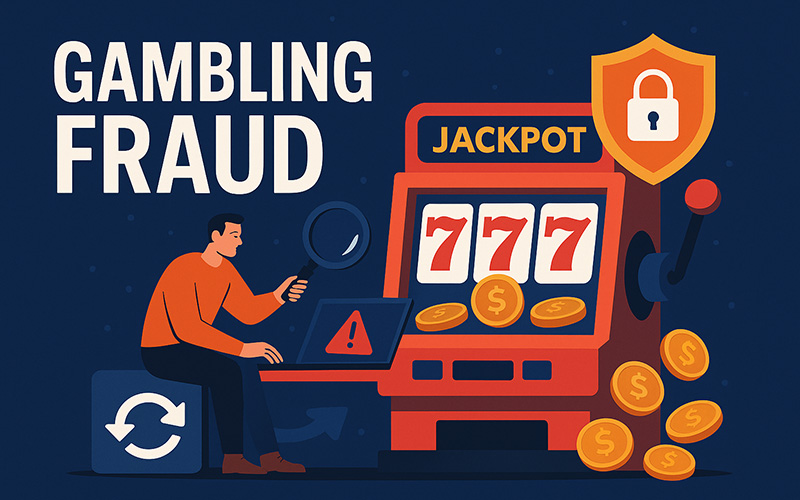
A scam does not always look like a hacker attack. Very often, it resembles a normal signup, a first deposit, a welcome bonus claim, or a withdrawal request. That is what makes it so difficult to control without automated checks.
The most common threats:
- bonus abuse;
- multi-accounting;
- collusion;
- account takeover;
- payment fraud;
- chargeback abuse;
- synthetic identities;
- bot-driven registrations.
Bonus abuse is one of the clearest examples. A fraudster can create several profiles, use similar devices, hide behind proxies, claim the same promo more than once, and withdraw the value before the operator sees the pattern. Multi-accounting often supports this behaviour because one person or group controls several accounts to bypass limits, exploit offers, or coordinate activity.
Collusion is another serious risk, especially in poker, peer-to-peer games, and betting environments. Several users may act as separate players on the surface, while their sessions, devices, timing, and win-loss behaviour show hidden coordination. If the casino cannot connect these signals, the scheme may continue long enough to hurt fairness and profitability.
Payment fraud creates a different pressure. Stolen cards, chargeback claims, and suspicious withdrawals affect the cashier, the service team, and banking partners. Once disputes grow, the operator may face higher processing costs and weaker trust from payment providers.
Key Features of a Casino Fraud Detection Tool
A strong anti-scam solution should protect the platform properly and ensure registration does not become a lengthy ordeal. Players want fast access, while operators need enough evidence to block harmful activity. The best systems help balance both sides.
Key criteria to keep in mind:
- Real-time risk scoring. The system should assess users during registration, login, deposit, gameplay, and withdrawal. Slow alerts are less useful because fraud losses often happen quickly.
- Device intelligence. The tool should detect repeated devices, emulators, spoofing tools, virtual machines, remote access software, and unusual browser patterns.
- Behavioural analytics. Risk checks should include how users act, how fast they move, when they appear, and whether their sessions resemble scripted behaviour.
- Identity and account linking. A suitable product should connect accounts that share signals across devices, IPs, deposit methods, identities, and behavioural patterns.
- Payment protection. Online casinos need defence against stolen cards, suspicious deposits, abusive chargebacks, and risky withdrawal behaviour.
- Custom rules. Each casino has its own bonus mechanics, markets, risk appetite, and player base. Flexible rules let operators adapt the tool to real business logic.
- Simple integration. API access, clear documentation, and fast deployment matter because a delayed implementation leaves the site exposed for longer.
SEON
The platform is one of the most recognised options for online casino fraud prevention. Its main value comes from real-time digital footprint checks, device intelligence, behavioural analysis, and flexible risk rules.
SEON positions its iGaming solution around bonus abuse, multi-accounting, account takeover, fake identities, transaction monitoring, and risk-based KYC. The company also states that its system uses more than 900 real-time signals across email, phone, device, and network data.
SEON is useful when an operator wants broad coverage across the full player journey. A suspicious profile can be checked at signup, then monitored again during deposits, gameplay, bonuses, and withdrawals.
SEON can help operators detect fraudulent activities:
- repeated registrations from one device;
- weak or missing digital footprints;
- high-risk emails and phone numbers;
- shared IP and device signals;
- suspicious withdrawal activity;
- unusual account behaviour.
The system is particularly relevant for welcome offer protection. Fraudsters often try to create many accounts before a campaign ends. SEON can flag links between profiles through shared device IDs, password hashes, IP data, and low-quality digital footprints. Custom rules are also important here. For example, an operator can create stricter scoring for users who combine a new email, a suspicious device, and a bonus claim within minutes after registration.
Collusion usually requires behaviour-based monitoring. SEON can support this by linking users through shared patterns during deposits, play, and withdrawals. The product is strongest when the operator feeds enough events into the risk engine, because isolated signup data may not reveal coordinated groups.
SEON is a strong choice for casinos that need a flexible all-around platform with fast deployment, real-time rules, and wide player journey coverage. It is especially useful for operators with active bonus campaigns and traffic from several geographies.
GeoComply
This solution is best known in regulated gaming for geolocation, device integrity, and location-backed fraud prevention. GeoComply is especially valuable when positioning matters for compliance, bonus control, payment protection, or suspicious account clustering.
GeoComply states that it runs 350 checks on every transaction to detect location, user, and device fraud. Its Chargeback Integrator also creates evidence reports with device and position insights in 60 seconds or less, and these reports are accepted by more than 70 payment processors.
GeoComply works well when the operator needs to know where the player really is and whether the device environment can be trusted. This is useful in regulated markets where access must depend on location, but it also helps identify fraud rings.
The tool can support detection:
- VPN and proxy use;
- location spoofing;
- device tampering;
- promotion abuse;
- proxy betting;
- account takeover;
- suspicious transactions;
- abusive chargebacks.
A group of accounts may look separate if each user provides distinct identity details. Location and device data can reveal a different picture. Several profiles may appear from the same household, device cluster, or suspicious area.
That type of intelligence is useful when fraud rings try to abuse signup bonuses at scale. It also helps operators spot users who hide their true location to bypass regional rules.
GeoComply has a clear advantage in chargeback disputes. Its reports combine device integrity and geolocation history, which can help prove that a transaction was linked to a known device and location. For online casinos, this can reduce time spent on manual dispute files.
GeoComply is a strong option for regulated operators, sportsbooks, and casinos with location-sensitive access, high chargeback exposure, or serious geolocation requirements.
ComplyAdvantage
This solution is built around fraud analytics, financial crime intelligence, behavioural signals, identity clustering, and graph network analysis. It is especially relevant when fraud prevention overlaps with AML, payment monitoring, and hidden relationship detection.
ComplyAdvantage states that its fraud detection product uses machine learning models trained on historical data, behavioural analytics, identity clustering, and graph network analysis. The company also indicates that the solution can detect more than 50 common payment fraud scenarios, including account takeover, synthetic identity, relationship fraud, and card-not-present fraud.
ComplyAdvantage looks at events, relationships, behaviour, and payment patterns. This makes it useful for operators with complex flows and larger compliance needs.
The product can support critical scam activities:
- payment fraud detection;
- account takeover checks;
- synthetic identity detection;
- suspicious profile changes;
- hidden account relationships;
- network-based investigations;
- explainable alerts.
Identity clustering is useful in casino fraud because abuse rarely happens in isolation. Several profiles may share similar behaviour, related payment data, matching timings, or linked account attributes. Graph analysis helps the risk team see these connections faster.
This can be valuable for collusion checks. If several accounts log in around the same time, follow the same betting pattern, and move funds in a coordinated way, the system can help surface the cluster.
Casinos with higher transaction volumes need more than basic fraud alerts. They also need to understand suspicious money movement, account changes, and risky customer behaviour across the lifecycle. ComplyAdvantage fits this profile well because fraud monitoring and financial crime intelligence are closely connected.
ComplyAdvantage is suitable for larger operators, payment-heavy casinos, and brands that want deeper fraud analytics with stronger compliance and financial crime context.
SHIELD
This platform takes a device-first approach to fraud intelligence. It focuses on fake accounts, account takeovers, referral and promo abuse, payment fraud, bot attacks, incentive exploitation, and collusion.
SHIELD states that its Global Intelligence Network covers 7 billion devices and 1 billion user accounts. Its online casino materials also highlight protection against ATOs, multi-account exploitation, bonus abuse, and automated bots, while its device identification solution claims more than 99.9% accuracy across app and web environments.
SHIELD is useful when fraud starts from the device layer. This is common in online casinos because bonus hunters and bot operators depend on emulators, app cloners, modified devices, VPNs, and automation tools.
The system can help detect key fraudulent activities:
- fake accounts;
- automated signups;
- device tampering;
- emulators;
- app cloning;
- repeated device abuse;
- payment fraud;
- collusion signals.
Promotional abuse often depends on scale. A fraudster who creates one profile may not cause much damage. A bot network that generates thousands of accounts can destroy campaign economics.
SHIELD helps operators identify suspicious devices and connected activity in real time. This makes it useful for mobile-heavy casinos and brands that see phantom traffic, fake installs, or automated account creation.
The tool also covers payment fraud, which makes it relevant beyond acquisition and signup protection. A risky device can be assessed during deposit and withdrawal, not only during onboarding.
SHIELD is a strong choice for mobile-first operators, casinos with heavy bot pressure, and brands that need real-time device intelligence against fake accounts and automated abuse.
JuicyScore
The solution focuses on device intelligence, behavioural analytics, and risk scoring. It is built around non-personal gadgets and session data, which can be attractive for operators that want fraud visibility without the need to rely only on identity documents.
JuicyScore states that it analyses more than 65,000 device parameters and uses over 230 predictors. Its How It Works page also describes up to 65,000 varied parameters sent to the backend and a risk score returned through the system.
JuicyScore helps operators detect danger through device quality, user behaviour, internet connection data, and software environment signals. This approach is useful when fraudsters try to appear new while using the same technical base.
The tool supports key anti-scam functions:
- multi-accounting detection;
- device switching analysis;
- account takeover prevention;
- remote access tool detection;
- proxy and connection anomalies;
- suspicious session behaviour;
- risk scoring for transactions.
Online casino fraud often involves altered devices, randomised fingerprints, and anti-detect tools. JuicyScore can help identify technical inconsistencies that suggest a user is hiding the real device environment.
This is especially useful during withdrawals from new accounts. If a small group of profiles shows similar device markers and unusual cashout behaviour, the operator can hold the request for review before funds leave the system.
JuicyScore fits casinos that need strong device-level scoring, fast technical signals, and flexible risk data for internal rules. It is also useful for operators that prefer device and behavioural insight over heavy dependence on personal identifiers.
Best Scenario for Each Tool
Each product has a different centre of gravity. Some are broader risk platforms, while others are stronger in device checks, location signals, chargeback evidence, or financial crime intelligence.
The right choice depends on where the operator loses money. A casino that suffers from fake registrations may need SEON or SHIELD first. A platform with location disputes may place GeoComply higher. A larger brand with complex transaction monitoring may lean toward ComplyAdvantage. A business with device manipulation issues may find JuicyScore especially useful.
Different threats require unique signal layers. Operators should avoid choosing software only by popularity and connect the decision to their real fraud map.
Useful matching by scenario:
- Best for bonus abuse control: SEON, SHIELD, and JuicyScore. These tools are strong because they can link accounts through device data, behavioural signals, and suspicious signup patterns.
- Best for collusion monitoring: ComplyAdvantage and SHIELD. Network analytics and device-based relationship mapping help uncover coordinated groups.
- Best for multi-accounting prevention: SEON, GeoComply, SHIELD, and JuicyScore. This threat usually needs device fingerprints, IP context, behavioural checks, and account linking.
- Best for chargeback handling: GeoComply. Its device and location evidence reports are especially relevant for disputes.
- Best for broader financial crime coverage: ComplyAdvantage. The platform is a better match when fraud, AML, payment monitoring, and hidden relationships sit in one risk framework.
- Best for fast device-level insight: JuicyScore and SHIELD. Both products help operators detect suspicious technical environments before the user causes damage.
Common Selection Mistakes for Anti-Scam Software
Fraud tools can protect revenue, but the wrong setup may create friction, false positives, and blind spots.
Common mistakes:
- Choosing by brand awareness alone. A famous provider may still be the wrong fit if its strongest signals do not match your main fraud problem.
- Ignoring integration work. A powerful tool becomes weak when the platform sends too few events or connects it only at registration.
- Checking players just once. Fraud risk changes during the user journey, especially at deposits, bonus claims, gameplay, and withdrawals.
- Blocking too aggressively. False positives hurt conversion and retention. A proper setup should add friction only when risk is meaningful.
- Leaving rules unchanged. Fraudsters adapt quickly. Risk settings need regular review after campaigns, market entries, product changes, and traffic spikes.
- Separating fraud and payments. Chargebacks, stolen cards, suspicious withdrawals, and promo abuse often overlap. Teams need shared visibility.
The Main Things about Fraud Detection Tools for Online Casinos
Scam protection has become part of platform performance. A casino that cannot detect fake users, linked accounts, risky devices, suspicious transactions, and collusion patterns will lose money even when traffic looks strong.
Key aspects to remember:
- SEON fits operators that need broad iGaming fraud protection across signup, bonus claims, deposits, gameplay, and withdrawals.
- GeoComply is a strong choice for casinos and sportsbooks that rely on accurate location checks, device integrity, and chargeback evidence.
- ComplyAdvantage suits larger platforms that need financial crime intelligence, identity clustering, payment fraud coverage, and network-based analysis.
- SHIELD works well for mobile-first operators that face bot traffic, fake accounts, device abuse, and automated promotion attacks.
- JuicyScore is useful for casinos that need deep fingerprinting, behavioural risk signals, and quick detection of suspicious account links.

Check the information used to contact us carefully. It is necessary for your safety.
Fraudsters can use contacts that look like ours to scam customers. Therefore, we ask you to enter only the addresses that are indicated on our official website.
Be careful! Our team is not responsible for the activities of persons using similar contact details.