Casino Configurator
Europe’s Safer Gambling Standard: One Framework, Many Compliance Headaches
Player protection is entering a new phase across the continent. Online operators have spent years adapting to local safer play rules, national reporting duties, and customer interaction requirements. Now, a shared reference point is becoming part of the same conversation.
The European standard EN 18144 was published through CEN national standardisation bodies on 31 May 2026, after a process that began with an EGBA proposal in 2022. According to the document, operators receive a common set of behavioural markers to help detect risky patterns earlier. In practice, the challenge is much bigger because gambling law still differs from country to country.
For operators, this standard is not a shortcut to easy compliance. It is another layer that must work alongside licensing rules, GDPR duties, national privacy laws, local intervention policies, and market realities.
How the European Standard Appeared

The idea started with a basic industry problem. Many operators, regulators, and health experts already used behavioural signs to detect possible harm, but Europe did not have one agreed list of markers for online gambling.
EGBA asked the European Committee for Standardisation to create such a list in 2022. CEN accepted the proposal, and the development process started in 2023 with national delegations that included gambling authorities, operators, academics, health experts, and consumer groups.
The result is EN 18144, a technical framework for markers of harm in online gambling. It does not create a medical diagnosis, nor does it tell operators exactly when to suspend an account or block a deposit. It defines a minimum set of indicators that can support behavioural analysis and earlier intervention.
The standard gives operators a shared vocabulary, but every business still needs to decide how these markers fit its own risk model, legal duties, and player base.
Common Benchmark in a Divided Market
A single reference point sounds useful, but the sector remains a complex legal environment. The European Commission states that there is no region-specific EU legislation for gambling services, and EU countries remain autonomous in how they organise these markets as long as they respect wider EU rules.
This means the new framework cannot erase national differences. A licensed operator in Germany, the Netherlands, Spain, Sweden, Malta, or Great Britain still answers to local requirements. The same marker can carry different practical weight depending on the regulator, product category, licence type, and enforcement culture.
For cross-border brands, this creates a difficult setup. A group may want one safer gambling model across all markets, yet each country may require different thresholds, reporting logic, data retention periods, and customer interaction steps.
Stable rules become essential here. Operators can adapt to strict obligations when the definitions are clear. Problems appear when policy changes arrive too quickly or when regulators expect new controls before technical teams can redesign systems, test logic, train support staff, and document the workflow.
Data Challenge behind Early Harm Detection
Risk recognition depends on the available information. A platform has to understand deposits, losses, staking patterns, session length, product movement, customer contacts, withdrawals, and use of safety tools.
EN 18144 identifies 9 core behavioural markers:
- stake volume;
- speed of play;
- deposit behaviour;
- cancelled withdrawals;
- player-initiated contact;
- gambling time;
- product use;
- losses;
- changes to safer gambling tools.
Operators will need to balance several data-related tasks:
- combine signals from gameplay, payments, CRM systems, customer support, and responsible gambling tools into one reliable view of player activity;
- respect GDPR principles, including data minimisation, which requires personal info to be adequate, relevant, and limited for the purpose of processing;
- avoid excessive interventions because weak risk logic can limit low-risk users and create unnecessary disputes;
- record why a marker triggered action, what response followed, and which data supported the decision.
This is where safer gambling and privacy can pull in different directions. A strong risk engine needs enough information to detect danger early. A compliant privacy setup requires control over what is collected, why it is used, and how long it is kept. The operator’s task is to connect these goals without a surveillance-heavy system that feels intrusive or legally fragile.
Why Markers Need Careful Calibration
Harm labels are useful only when they are configured properly. A player who increases deposits during a holiday weekend may trigger a signal. Another user who shifts from sports betting to casino games may trigger a different one. These behaviours deserve attention, but they do not always prove harmful activity.
The danger lies in overreaction. A strict model can treat common player behaviour as a crisis. A weak one can miss genuine risk until damage has already grown. Good calibration is the middle ground, and it requires evidence, testing, and regular review.
Poor adjustment can create several business and protection risks:
- high number of false alerts;
- unjustified deposit limits;
- unwanted cooling-off periods;
- unnecessary account closures;
- higher support pressure;
- frustrated loyal users;
- movement to illegal platforms.
Germany is often mentioned as a warning case in this discussion. Its regulated online market uses cross-operator control tools and a general monthly deposit limit of $1,100, while legal commentators have also noted debates around LUGAS, data protection, and the proportionality of certain handling mechanisms. The real point is that rigid control can create unintended outcomes when the system leaves too little room for context.
Compliance Is Not the Same as Protection
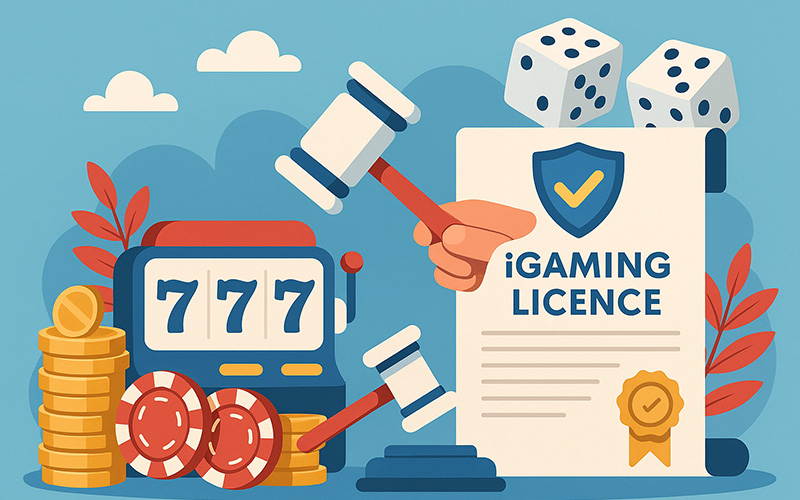
A gambling operator can meet formal requirements and still deliver weak safety. That may sound counterintuitive, but it is one of the biggest issues in safer gambling today. Compliance usually asks whether the operator has the required policies, tools, records, and reporting structure. Effectiveness asks another question. It checks whether those tools actually reduce harm and keep players inside the regulated environment.
When Control Becomes Friction
Licensed platforms need intervention tools. There is no serious safer gambling model without deposit limits, account reviews, timeouts, self-exclusion options, and direct contact in higher-risk cases.
Still, the user experience matters. If the system reacts too harshly, players may start seeing licensed brands as punitive. They may feel blocked without explanation, pushed through repeated checks, or restricted by alerts that do not match their actual behaviour.
That creates a commercial and social problem at the same time. The player loses trust, while the operator loses the ability to guide that person through a regulated channel.
Illegal Market Risk
The safest environment for a vulnerable player is a licensed platform with monitoring, trained staff, auditable controls, payment checks, and responsible gambling tools. Illegal sites do not usually offer the same protection level.
If regulation makes licensed platforms too difficult to use, some customers may search for easier access elsewhere. That outcome damages the purpose of consumer protection because the user leaves the environment where controls can actually work.
Soft Law and Sovereignty
The new framework also raises a legal and political question. Gambling regulation has stayed largely national in Europe. Each country has its own view of acceptable products, advertising limits, deposit controls, reporting duties, and social risk.
A voluntary standard can still create pressure. Courts, regulators, consultants, suppliers, and operators may begin treating EN 18144 as a reference point for good practice. Over time, this can influence expectations even without a direct legal mandate.
That is why some legal experts describe the framework as a form of soft-law centralisation. It does not arrive as an EU gambling regulation, but it may still push markets toward similar models. For operators, this does not automatically simplify the map. It may create another layer on top of national rules.
The practical question is simple. If a local regulator adopts the standard into guidance, supervision, or licence conditions, the voluntary label becomes less important for operators in that market. The business still has to comply with local expectations.
The UK View: Cooperation without Automatic Adoption

Great Britain is a useful example because the UK Gambling Commission already has detailed customer interaction rules. Remote licensees must have effective systems and processes to monitor activity from the moment an account is opened, and they must use a range of indicators to identify harm.
This makes the CEN standard relevant but not automatically binding for GB licensees. The UK framework already requires operators to detect and act on risk under the Licence Conditions and Codes of Practice.
For international operators, the UK example shows how the standard may function in practice. It can support regulatory cooperation and shared thinking, while national licence rules remain the real source of legal duties.
What Operators Should Prepare Now
Platform owners should not wait until each regulator decides how to use EN 18144. The direction is already clear. Safer gambling controls are becoming more data-led, documented, and closely connected to licensing risk.
A strong preparation plan:
- Review current risk triggers and check whether they are based on real behavioural evidence.
- Map all player data sources and define how information moves between systems, teams, and analytics tools.
- Check privacy controls to make sure harm detection does not create avoidable GDPR exposure.
- Build several intervention levels so the response matches the level of risk.
- Keep audit trails that explain why an action was taken and what information supported it.
- Review each market separately because EN 18144 will not remove local licensing duties.
- Test the model regularly because player behaviour, product design, and regulator expectations keep changing.
Operators need a system that can detect risk early, avoid unnecessary pressure on low-risk users, respect privacy rules, and prove every important decision during an audit.
The Main Things about Europe’s Safer Gambling Standard
EN 18144 can improve consistency in harm detection, but it will not remove the hard work of local compliance, data governance, and proportionate intervention.
Key aspects to remember:
- EN 18144 creates a shared European reference point that can help operators identify possible gambling harm through clearer behavioural markers.
- National regulators will still decide how the standard affects licensed platforms, so every market will require separate legal checks.
- Player data will remain central to safer gambling systems, but operators must collect and process it within strict privacy and GDPR boundaries.
- Poorly calibrated controls can restrict low-risk users, increase support pressure, damage trust, and make licensed platforms feel less attractive.
- The strongest approach combines compliance, evidence-based risk logic, regular review, and flexible technical design that can adapt to each jurisdiction.

Check the information used to contact us carefully. It is necessary for your safety.
Fraudsters can use contacts that look like ours to scam customers. Therefore, we ask you to enter only the addresses that are indicated on our official website.
Be careful! Our team is not responsible for the activities of persons using similar contact details.