Casino Configurator
Cybersecurity and Regulatory Exposure in Online Casinos: The Risk Areas Operators Need to Control in 2026
A professionally developed iGaming platform typically looks smooth on the surface. However, even the most well-designed gambling sites can carry weak points underneath. Operators have to protect not only uptime and payment flows, but also identity checks, data quality, reporting accuracy, and the wider control system around the project.
Risk management has become a direct part of commercial stability. Verizon’s 2025 DBIR found that credential abuse accounted for 22% of leading initial attack vectors and exploitation of vulnerabilities for 20%, while ENISA’s 2025 threat landscape reported that social engineering remained the main entry point, with phishing-related tactics making up about 60% of observed cases.
What Operators Need to Watch in 2026

Cyber risk and regulatory pressure are closely tied to revenue. A platform outage can disrupt the deposit journey, interrupt live sessions, and waste acquisition spend within minutes. A weak compliance process can slow onboarding, block transactions, or attract unwanted attention from regulators and payment partners. IBM’s 2024 report found that the global average cost of a data breach reached $4.88 million, and 70% of affected organisations reported significant or moderate operational disruption.
That is why these factors directly affect trust, retention, chargebacks, staffing pressure, market access, and licence continuity. The UK Gambling Commission continues to emphasise AML updates and emerging risk reviews for operators, while the EU’s updated AML framework keeps gambling services within the group of obliged entities required to apply due diligence and control measures.
Cyber Threats that Can Disrupt Performance
Most operators already know the broad categories of technical risk. The real issue is how quickly these problems move from backend systems into visible commercial damage.
The main cyber risks operators should keep under regular review:
DDoS Attacks
This type of attack remains one of the most direct ways to disrupt a gambling platform at the worst possible moment. When traffic spikes around tournaments, promotions, or major sports events, even a short period of instability can damage user confidence and push users elsewhere. ENISA continues to treat DDoS as a prominent threat. Meanwhile, OWASP notes that uncontrolled API resource use can also lead to denial-of-service conditions and increased operating costs.
Account Takeover
Another major risk area affects both users and the operator’s balance sheet. Credential stuffing is effective when users reuse passwords across multiple services, which is why credential abuse remains one of the leading initial attack vectors in real breach cases. Once an account is compromised, the impact may include drained balances, support disputes, refunds, and chargebacks.
Phishing
This method remains highly effective because it targets behaviour rather than code. ENISA’s 2025 report identified social engineering as the leading entry point and estimated phishing-related tactics at about 60% of observed cases. For casino operators, this risk affects both sides of the operation. Users may expose credentials, while internal staff can unintentionally grant access through fake emails, chat messages, or support requests.
Payment Fraud, Bonus Abuse, and Stolen Credentials
These issues require continuous monitoring because they often resemble normal user activity at first. The same applies to weak APIs and poorly controlled integrations. Modern casino platforms depend on payment systems, KYC services, game content, CRM layers, and analytics integrations. Insecure API design can lead to excessive resource consumption, denial of service, and increased costs, making this a business risk, not just a technical concern.
Data Exposure
This risk carries a dual impact. First comes the immediate operational response, including system isolation, user communication, forensic investigation, and support workload. Then follow regulatory reporting, formal review, and the longer process of demonstrating that adequate controls were in place before the incident. Post-breach support, lost revenue, and regulatory penalties all contribute to the financial impact.
What Cyber Incidents Cost Beyond the IT Budget
A security problem rarely stays inside the technical department. For operators, the impact usually spreads across several parts of the business at the same time.
How the main losses often appear when an incident reaches production:
- Lower platform availability and weaker acquisition efficiency. Traffic may still arrive, but it converts poorly when users meet delays, failed logins, or unstable cashier flows. That turns media spend into a waste very quickly.
- Higher fraud losses, chargebacks, and manual support pressure. A compromised account or abused payment flow often creates a second cost layer after the direct loss, because agents, fraud teams, and finance staff must step in to resolve disputes.
- Lower player confidence and weaker retention. Users may forgive a slow page once, but they respond much more sharply to suspicious logins, blocked withdrawals, or news of a data leak.
- Closer attention from regulators, banks, and payment partners. A breach can raise questions about record quality, access control, and whether the operator’s internal governance actually matches what it claims on paper.
- More recovery spending after the event. Incident response, auditing, infrastructure review, customer communication, and control redesign all take time and budget, even when the platform returns quickly.
Regulatory Exposure
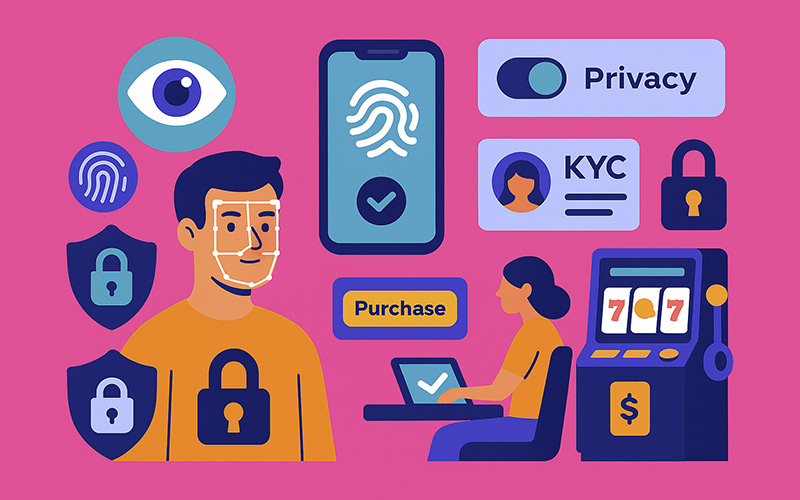
Compliance trouble does not always start with a major breach or a headline penalty. In many cases, it grows through small breaks in routine processes that no one treats as urgent early enough.
The most common weak points usually appear in daily operations:
- delayed KYC during traffic surges;
- incomplete audit trails;
- weak transaction monitoring thresholds;
- uneven rule enforcement across jurisdictions;
- manual reporting and fragmented data.
Why Issues Start with Routine Friction
Regulatory pressure often begins with timing and consistency. A verification queue grows during a campaign. A manual review sits too long. A threshold for additional checks is set too high. A report is prepared from several spreadsheets instead of one reliable source. None of these gaps looks dramatic on its own, yet together they create a picture of weak control.
The UK Gambling Commission now requires identity verification before a customer is allowed to gamble, and its licence conditions state that operators must also inform customers what information may be required before permitting deposits. It also expects operators to take reasonable steps to ensure identity data is accurate.
Monitoring standards are just as important. UK guidance states that operators must conduct ongoing monitoring of the business relationship, and it highlights enhanced due diligence and advanced monitoring in higher-risk cases. The Commission has also criticised poor practices where thresholds were set too high and noted that operators need to monitor all transactions and activity to properly identify suspicious behaviour.
Audit trails matter for the same reason. The Commission’s AML guidance states that record-keeping must create a trail that can support financial investigations and compliance reviews. If an operator cannot show what happened, when it occurred, who approved it, and what data supported the decision, the business becomes much harder to defend, even when no malicious intent exists.
Why Expansion Makes Control Harder
Cross-border growth increases exposure because local rules may overlap without fully aligning. One jurisdiction may focus on the source of funds, another on identity timing, another on system testing, and another on reporting structures. The EU’s AML framework keeps gambling service providers within the due diligence scope, while member-state supervision continues to evolve around this broader structure. At the operator level, this means that expansion without standardised governance tends to create uneven control.
The same issue appears within the organisation. Different brands, local teams, and outsourced partners may use slightly different workflows. This is where regulatory exposure becomes operational rather than purely legal. The issue is not only whether the rules exist, but whether they are applied consistently, properly logged, and reviewed in a timely manner across the entire operation.
Why Security and Compliance Belong in One System
Operators often split cyber defence and regulatory compliance into separate areas. One team focuses on access, infrastructure, and incident response, while another handles KYC, AML, reporting, and local obligations. That model may work in theory, but in practice it creates blind spots.
A technical failure can quickly become a compliance issue. A data breach may require disclosure and formal review. A compromised account can trigger payment disputes and increased scrutiny of authentication controls. A weak audit trail can slow incident investigation and weaken its credibility. ISO 27001 explicitly defines information security as a risk management system built around people, policies, and technology, rather than isolated tools.
That is why mature operators treat these functions as interconnected. When a single control framework supports the entire operation, it becomes easier to detect suspicious behaviour, respond faster, maintain clean records, and demonstrate real governance to regulators. The goal is a structure that limits damage and remains defensible under pressure.
Practical Ways to Cut Exposure
No casino platform can eliminate risk completely. However, operators can significantly reduce exposure by embedding control into daily operations rather than reacting only after incidents occur.
Operators typically achieve better outcomes when risk management is integrated into routine processes:
- Use continuous monitoring for both user activity and internal workflows. This helps identify unusual login patterns, suspicious transactions, and bottlenecks in KYC or reporting queues before they escalate. The UK Gambling Commission’s AML guidance requires ongoing monitoring, and its emerging-risk notices emphasise that controls must evolve rather than remain static.
- Strengthen access management and authentication. Multi-factor authentication is now a baseline, but phishing-resistant methods should be prioritised for high-risk access. PCI guidance requires MFA in sensitive environments, while NIST highlights that phishing resistance depends on cryptographic authentication rather than manual code entry.
- Protect infrastructure with encryption, segmentation, and clear permission models. Effective security limits lateral movement within systems if an account or service is compromised. ISO 27001 promotes a risk-based approach across people, policies, and technology, while PCI DSS remains essential for payment environments.
- Review financial and bonus flows as potential abuse points. Fraud teams should work closely with CRM and payments, as bonus misuse, stolen cards, and repeated account patterns often overlap. This area also requires strong API governance, since weak integrations can lead to denial-of-service risks and unnecessary costs.
- Automate KYC, AML, and reporting where appropriate. Automation does not replace judgement, but it improves consistency, reduces delays, and lowers the risk of human error. This is critical as UKGC rules require identity checks before gambling, while the EU AML framework maintains strict due diligence requirements for iGaming operators.
- Maintain full audit trails and a clear incident response process. Operators should be able to demonstrate what happened, what decisions were made, who made them, and what evidence supported those actions. Record-keeping must support investigations, and regular independent security audits are expected under regulatory testing frameworks.
- Test, update, and govern on a fixed cycle. Controls that were effective a year ago may no longer be sufficient. Threat landscapes evolve continuously, and regular reviews help operators adapt before issues escalate.
The Main Things about Cybersecurity and Regulatory Exposure in Online Casinos
Security and compliance no longer sit on the edge of the business. They now shape platform stability, player trust, payment continuity, and the ability to expand into regulated markets with confidence.
Key aspects about cybersecurity and legal exposure at iGaming sites:
- Credential abuse, phishing, DDoS pressure, and weak integrations remain some of the clearest technical risks for casino operators in 2026.
- Compliance trouble often begins with small process failures such as delayed verification, high monitoring thresholds, incomplete records, or manual reporting gaps.
- Cyber incidents affect much more than infrastructure because they also raise support costs, hurt retention, and invite closer review from regulators and payment partners.
- Operators reduce exposure more effectively when access control, monitoring, audit trails, and reporting all work inside one joined-up governance system.
- The strongest long-term approach combines automation, testing, MFA, encryption, and standardised internal procedures across every target market.
Order a turnkey solution with maximum security assurance and legal backing from the Gaminator team.

Check the information used to contact us carefully. It is necessary for your safety.
Fraudsters can use contacts that look like ours to scam customers. Therefore, we ask you to enter only the addresses that are indicated on our official website.
Be careful! Our team is not responsible for the activities of persons using similar contact details.