Casino Configurator
Stablecoins in Online Gambling: Fast Payments, Frozen Wallets, and Smarter Crypto Mix
For years, dollar-pegged tokens looked like the perfect answer for gambling with alternative currencies. They gave operators the speed of blockchain, the reach of digital assets, and a balance that did not fluctuate every hour. That combination made cashier management easier, bonus accounting cleaner, and cross-border payments far less painful than traditional banking rails. These assets now represent more than two-thirds of crypto transaction value in recent periods, while the sector surpassed $300 billion in market capitalisation by mid-2025.
Then came the March 2026 backlash around Circle. Industry reports indicated that USDC balances across 16 business hot wallets tied to exchanges, casinos, and forex firms were frozen in connection with a sealed US civil case. This raised several critical questions, including whether issuers can block access and how much control operators truly have over assets within their payment stack.
- Price stability. 1 token ≈ 1 USD
- Fast transactions. No banking delays
- Simple accounting. No FX recalculations
- Global reach. Easy cross-border payments
- 66%+ of crypto transactions — stablecoins
- $300B+ market capitalization



What Changed in 2026
- USDC wallets frozen (Circle case)
- $4.2B USDT frozen (Tether history)

Issuers Can:
- Freeze wallets
- Block transactions
- Restrict access to funds

Core Risk
- Control is not fully on the operator's side
- Even stable assets can become inaccessible
Approach Comparison

Stablecoins
- Predictable value
- Operational simplicity
- Issuer control risk
Bitcoin (BTC)
- Full ownership control
- No centralized intervention
- High volatility

Best Practice: Hybrid Crypto Stack
- Stablecoins → daily operations
- BTC → reserves/alternative flows
- Fast chains (TRON, Solana) → micro-transactions


Key Priorities for Operators
- Diversification. Avoid single issuer dependency
- Liquidity separation. Hot wallets vs reserves
- Auto-conversion rules. Reduce manual decisions
- Monitoring. Track transactions and sources
- Fallback scenarios. Be ready for disruptions
Key Takeaway

- Stablecoins are a tool, not a solution
- Risk is embedded in the model
- Stability comes from architecture, not asset choice
Gaminator Helps
- Build payment architecture
- Structure wallets and liquidity
- Manage operational risks


For casino brands, this is not a debate about whether crypto is good or bad. It is a business question about treasury design, withdrawal continuity, payment resilience, and the level of operational dependence placed on a single issuer. If you want to launch a crypto-ready casino with the right cashier logic, wallet structure, and risk controls from day one, explore Gaminator custom solutions.
Why Dollar-Pegged Coins Are the Default Casino Pick
For many operators, assets like USDT or USDC solved a practical problem before they became a branding choice. A casino needs payment speed, clean reconciliation, and a balance that users can understand without constantly monitoring market volatility.
That is exactly where fiat-backed tokens gained ground. Adoption has been driven by faster settlement, lower transaction fees, and cross-border utility. Businesses and financial institutions use them for international payments, liquidity management, and protection against currency volatility.
The main advantages of this format fits online gambling well:
- predictable deposit value;
- simpler bonus accounting;
- faster cross-border settlement;
- lower transfer friction;
- easier treasury planning;
- smoother multi-market operations.
Those benefits are not theoretical. Visa said in September 2025 that it was testing a model that allows businesses to fund international payments with stablecoins instead of pre-funding local accounts with cash (this approach can speed up cross-border transfers and free up trapped capital). Mastercard moved in the same direction in March 2026. It stated that stablecoin infrastructure helps support business payments, remittances, and payouts by improving speed, cost efficiency, and availability. As networks of that size build around this payment layer, operators should treat it as infrastructure rather than a short-lived trend.
That helps explain why so many crypto casinos leaned into USDC and USDT. A business can price games, bonuses, cashback, VIP thresholds, and withdrawal promises much more easily when the balance behaves like digital dollars rather than a moving commodity. The asset may live on-chain, but the internal economics feel closer to traditional fiat money.
What March 2026 Changed for Operators
The spring controversy mattered because it turned a legal clause into an operational risk. Circle’s own USDC terms state that it reserves the right to block certain addresses, freeze associated funds, and take further action when it believes activity may violate its policies or when it receives a valid legal order from a government authority.
Freeze Power Is Part of the Product
Circle’s language makes it clear that issuer control is not an edge case—it is embedded in the product design. The same terms also warn about potential operational issues and delays in redemption. For a casino operator, this is not a legal detail to leave to external counsel. It directly affects the payment risk model, because a blocked wallet can impact treasury, interrupt withdrawals, disrupt settlement timing, and create immediate support pressure.
The Issue Is Bigger than One Company
This is why the Circle case should not be treated as a USDC-only issue. As of February 27, 2026, Tether had frozen approximately $4.2 billion in USDT linked to illicit activity ($3.5 billion since 2023). The company has stated that it can remotely freeze tokens in user wallets when requested by law enforcement.
In practice, the same structural trade-off exists across all major fiat-backed stablecoins. Stability and speed come with the risk of issuer intervention.
Operators Feel the Impact Faster than Users
A retail user may only notice a problem when their personal wallet stops working. A casino operator feels it much earlier. A single blocked treasury address can interrupt outgoing payments, delay partner settlements, and force the finance team to reallocate liquidity under pressure.
This is why the issue must be addressed at the level of wallet architecture, not just at the product or marketing layer.
Stablecoins vs Bitcoin
This comparison is often framed in emotional terms. For operators, the choice is not between safe and risky money, but between two different types of exposure.
Crypto comparison in an operational context:
- Stable Price, Centralised Control. Dollar-backed tokens make budgeting, balance displays, and promotional planning much easier. At the same time, the issuer can freeze funds or respond to legal action in ways that directly affect the business, even if the market price remains stable.
- Direct Ownership, Moving Valuation. Bitcoin removes the stablecoin issuer from the equation. However, that freedom creates a treasury challenge, as the asset can reprice sharply within a short period. Between October 6, 2025, and February 6, 2026, BTC corrected by roughly 50%, with implied volatility reaching multi-year highs during the sell-off.
- Cleaner Accounting, Higher Concentration Risk. A fiat-backed balance is easier to reconcile across PSPs, wallets, and back-office reports. However, when a large share of the cashier depends on a single issuer, token, or chain, a legal or technical disruption becomes much harder to absorb.
- More Autonomy, Less Predictable Forecasting. A decentralised reserve gives operators stronger control over assets. At the same time, margins, bonus budgets, and reserve requirements become less predictable when treasury value can fluctuate even during a normal operating cycle.
This is why the operator discussion should move away from ideology. Bitcoin does not solve the stablecoin problem—it replaces one type of risk with another. A well-structured business does not focus on which option appears more “pure.” It evaluates which exposure can be managed more effectively within its operating model.
Mixed Crypto Stack
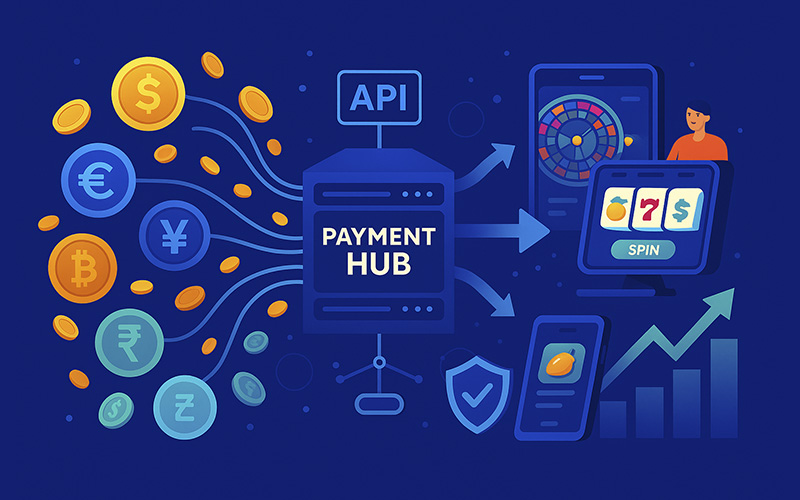
Most operators do not need to choose one option and reject the other. A more resilient setup is typically layered. Stablecoins can handle routine cashier activity, while decentralised assets can complement them as alternative deposit and withdrawal rails or as part of a diversified treasury strategy.
This approach works for a simple reason: not every balance within a casino serves the same purpose. Working liquidity for daily withdrawals requires speed and price stability. Strategic reserves require stronger control and lower issuer dependence. Marketing also benefits from variety, as some users prefer a stable dollar balance, while others value direct access to BTC or other non-custodial assets.
This structure also improves flexibility when conditions change. If regulation tightens, transaction costs increase, or issuer actions create uncertainty, the cashier does not need to stall. Traffic can be redirected, treasury exposure adjusted, and user choice preserved. This is significantly more resilient than reliance on a single token or payment rail.
Assets that Deserve a Place in a Casino Cashier in 2026
Coin support should follow function. Operators do not need a long menu for the sake of variety. They need a focused set of assets that makes commercial sense.
Stablecoins for Routine Cashier Flow
Fiat-backed tokens still deserve a central role. They remain the easiest bridge between on-chain settlement and everyday gambling economics. A deposit of 100 USDT is still worth $100 when the user enters a slot, claims a sportsbook bonus, or waits for a payout. That clarity supports customer service teams, CRM operations, and finance departments.
Bitcoin for Decentralised Access
BTC still matters because it offers strong brand recognition, deep liquidity, and a more decentralised ownership model than issuer-backed coins. It is not ideal for every treasury function, but it remains valuable as a payment option for users who prioritise control over price stability. The drawback, again, is price fluctuation.
Low-Fee Alternatives for Transfers
This is where assets such as Solana or Tron can make sense. They are useful when the goal is efficient value transfer. A casino that promises fast deposits and smooth withdrawals should consider network costs and confirmation times, especially in lower-value segments where fees can significantly impact the transaction.
Privacy-Focused Coins with a Stricter Filter
Some users still prioritise discretion. From an operator’s perspective, this demand must be balanced against compliance requirements. FATF’s latest guidance focuses on stablecoins, peer-to-peer transfers, unhosted wallets, and illicit finance risks, indicating that regulatory scrutiny is increasing. This means the commercial upside must be carefully weighed against licensing, AML, and partner-risk considerations.
The Real Operator Issue: Treasury, Liquidity, and Withdrawal Continuity
Too many payment discussions stop at deposit options. That is only the entry point. The more complex question is what happens after funds reach the platform.
A casino must decide how much liquidity sits in hot wallets, what remains in reserve, when conversion should occur, and which balances can remain exposed to market fluctuations. If stablecoins are concentrated on a single issuer-heavy rail, freeze risk increases. If too much value is held in BTC, treasury volatility rises. If conversion rules are manual, response time slows under stress.
This is why withdrawal continuity matters more than theory. Users may tolerate price fluctuations in the assets they choose, but they are far less tolerant of delays in accessing their funds. In gambling, payment issues quickly become trust issues. This is why stablecoin strategy should be treated as an operational concern, not just a crypto topic.
Risk Controls Every Casino Should Build
A crypto-friendly cashier only works when the control layer is stronger than the marketing message.
Measures deserve a place in any serious setup:
- Set issuer exposure limits. Do not let one stablecoin become the entire treasury. A cap by token, chain, and issuer gives the business more room to react if an operational or legal event hits one rail.
- Separate working liquidity from reserves. Keep hot-wallet balances sized for normal withdrawal flow, not for the whole treasury. That lowers the amount at risk during any freeze, exploit, or routing failure.
- Automate conversion rules. A casino should know in advance when BTC exposure is trimmed, when incoming deposits are converted, and when reserves are rebalanced. Manual decisions look flexible until the market moves quickly.
- Treat wallet monitoring as a daily control. The risks tied to unhosted wallets and peer-to-peer activity. That makes source-of-funds review, chain analysis, and transaction screening more important.
- Align coin support with each market. A payment menu that works in one jurisdiction can create problems in another. The right list depends on licensing terms, banking partners, AML obligations, and the level of comfort your PSP stack has with each asset.
- Build a freeze-response plan before you need one. If one issuer-backed wallet is blocked, the team should already know how to reroute liquidity, communicate with users, and protect withdrawal speed. That response should be written down long before the first incident arrives.
There is no universal cashier template. The answer depends on business priorities.
The main decision points:
- target jurisdictions;
- player payment habits;
- treasury risk tolerance;
- withdrawal speed promises;
- PSP and wallet coverage;
- AML and KYC capacity;
- bonus model economics;
- support team readiness.
The stronger approach is usually simple. Start with the set of assets that your business can monitor, reconcile, and defend under pressure. Then expand only when a new rail improves either market fit or operational resilience.
The Main Things about Gambling with Stablecoins
Tokens like USDT or USDC still make sense for online casinos, but they should no longer be treated as neutral cash substitutes. March 2026 showed that the real operator question is who can interrupt that movement and what your business does next.
Key aspects about gambling with dollar-pegged tokens:
- Stablecoins remain useful because they simplify pricing, cashier flow, and cross-border settlement, which is why large payment networks such as Visa and Mastercard keep building around them.
- The trade-off is centralised control, since Circle’s terms allow address blocking and freezing, while Tether has already frozen billions of dollars in USDT over crime-linked cases.
- Bitcoin removes issuer intervention, but it introduces much sharper treasury volatility, which makes it dangerous to treat as a pure cash-management tool.
- Most operators are better served by a mixed crypto stack that combines routine stablecoin use with decentralised alternatives and clear conversion rules.
- The winning model is not the one with the longest coin list, but the one with stronger wallet segregation, better monitoring, and a payment plan that still works when one rail fails.
Buy a turnkey gambling solution from a leading supplier of iGaming services on the market.

Check the information used to contact us carefully. It is necessary for your safety.
Fraudsters can use contacts that look like ours to scam customers. Therefore, we ask you to enter only the addresses that are indicated on our official website.
Be careful! Our team is not responsible for the activities of persons using similar contact details.