Casino Configurator
Gambling Situation in Argentina: Why a Federal Model Is Still a Distant Goal
Among all the countries in Latin America, Argentina looks like one of the most promising markets. However, it is also one of the most difficult to read from a legal perspective. It obviously has strong demand, an active online audience, and clear commercial potential. At the same time, operators cannot treat it as one single licensing zone.
Gambling laws are built around the provinces. All of them have the power to regulate activity within their own territory, while the City of Buenos Aires operates as an autonomous jurisdiction with its own authority. This shapes a market where iGaming can be legal and structured in one place, yet has to align with another set of conditions a few kilometres away.
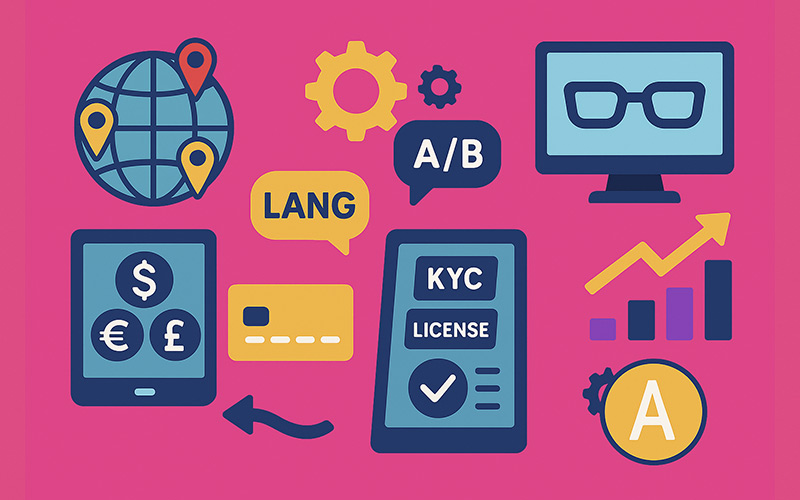
For entrepreneurs, this can feel bewildering. A brand that wants broad coverage must deal with different licensing procedures, local prerequisites, advertising limits, technical controls, and tax realities. From the outside, a federal system may sound like the obvious solution. A single licence, compliance standard, and local promotional opportunities would make expansion much easier.
Still, Argentina does not move in that direction so easily. Provincial control is deep within the constitutional structure, and many regulators see local supervision as a strength. The more realistic path is collaboration between regions, particularly in the fight against illegal gambling.
Argentina’s Gambling Model
The country does not run on a single national licence. Because authorisation is granted locally, every operator must understand the region it wants to target before it plans launch costs, marketing, and platform configuration.
Each province can create its own legal framework for games of chance, betting, lotteries, and similar activities. The City of Buenos Aires also has the power to regulate gaming within its borders. This structure is especially important for online casinos and sportsbooks because digital activity can cross borders easily, while licences remain tied to local territory.
This is why the legal map is not uniform. Some jurisdictions already have active operators. Others have moved more slowly. Legal procedures, licence duration, supplier registration, laboratory certification, responsible gambling tools, and tax duties can vary from one part of the country to another.
The Province of Buenos Aires deserves special attention. It is the most populated in the country and represents around 38% of Argentina’s residents. For this reason, it is usually one of the most attractive entry points for operators. However, high value also comes with strict conditions, including the need for careful local alignment.
The City of Buenos Aires is a separate case. It is the capital and an autonomous jurisdiction, so operators should not confuse it with the surrounding province. From a business perspective, both areas are commercially relevant, yet they are not controlled by the same regulator.
Federal System Attractiveness
A single framework would reduce many pain points that appear during market entry. It would not solve every commercial issue, but it could simplify the legal structure and make expansion more predictable.
How a national model could be helpful:
- One licence for broader market access. A single permit could allow operators to work across the country without a separate approval process in every region. This would reduce paperwork and shorten the route from planning to launch.
- Common compliance standards. Unified rules for KYC, AML, reporting, responsible gambling, and platform certification would help operators build one internal control system. This would be easier than adapting procedures by province.
- Clearer marketing conditions. Nationwide rules for advertising would reduce confusion around where a brand can promote its services. This is especially important for digital campaigns, affiliates, social media, and influencer partnerships.
- Simpler entry for international companies. Foreign operators often need extra time to understand local partners, licence sharing, regional approvals, and commercial obligations. A federal route would make the first stage easier to evaluate.
- Better competitiveness against illegal platforms. Licensed operators compete with unlawful sites that do not follow the same rules. A unified system could strengthen legal visibility and make enforcement more coordinated.
From an operator’s perspective, this sounds attractive. A national framework could lower duplication, support cleaner expansion, and reduce the gap between legal brands and black-market competitors.
Barriers to the Unified Regulation

Argentina’s constitutional structure makes a federal gambling framework difficult. Provinces keep the powers that were not delegated to the national government, and gambling regulation belongs to this local sphere.
The main barriers:
- constitutional limits;
- provincial control over revenue;
- local political interests;
- different social realities across jurisdictions;
- low national priority;
- public caution around gambling growth;
- limited appetite for surrendering authority.
A federal model would require a major political agreement. Provinces would need to accept a different balance of power, and that is unlikely when gambling revenue supports local projects and social programmes.
Many provinces also believe they understand their own territory better than a central authority could. Local regulators can react to specific player risks, economic conditions, social concerns, and enforcement problems. This is a strong argument against full centralisation.
Public perception is another complication. Gambling can bring tax income and safer player protection when it is regulated well, but political support for the industry is often cautious. Few public officials want to be seen as expanding gambling activity. This reduces the chances of a strong national reform effort.
Decentralisation as a Local Strength
Operators often describe Argentina’s province-based system as fragmented. Provincial authorities can see the same structure from a different angle. For them, local control supports closer supervision and more direct use of revenue.
Understanding of Player Behaviour
Every province has its own social and economic context. A large urban market does not face the same conditions as a smaller or less densely populated area. Local regulation allows each region to shape the offer according to its own reality.
This can help with responsible gambling measures, player education, enforcement priorities, and operator oversight. A central model might create cleaner rules on paper, yet it could also miss local nuances.
Direct Use of Gambling Income
Revenue is one of the biggest reasons provinces may resist a federal approach. When gambling proceeds stay closer to the region, they can be directed into local priorities.
Centralisation could move money away from provincial budgets. For governments, gambling income is not only a business issue but is also linked to public spending, social purposes, and political accountability.
Closer Supervision
A nearby authority can monitor operators, advertising, land-based activity, and public concerns more directly. In theory, this makes control more responsive.
Of course, this does not mean the system is simple. Local supervision still needs strong cooperation because online gambling does not respect provincial borders. However, many regulators would prefer stronger coordination over a full transfer of power to a national body.
Fragmentation for Operators
The current model can work, but it creates operational pressure. A company that enters Argentina must think through legal, commercial, and technical problems at the same time.
Operators usually face several recurring issues:
- Different rules across regions. Licence terms, reporting duties, responsible gambling obligations, supplier registration, advertising restrictions, and technical conditions can change from one region to another. This creates a heavier compliance workload.
- Higher legal and administrative costs. A multi-province strategy requires more documentation, local advice, and coordination with regulators. These costs can affect the launch budget before marketing even begins.
- Partnership requirements in key sectors. Some important regions require or strongly encourage local participation. For international operators, this can create questions around control, profit sharing, partner reliability, and long-term strategy.
- Uneven commercial value. Argentina has 23 provinces and the autonomous capital, but not all jurisdictions carry the same business potential. Large areas can justify heavier investment, while smaller markets may be harder to evaluate as standalone opportunities.
- Advertising confusion. A legal brand in one province may not be permitted in another. Players can see ads online and assume a platform is available to them, even when it is not authorised in their location. This creates both compliance risk and trust issues.
Platform planning should start with region mapping. The real issue is where the operator can enter legally, profitably, and with enough room to scale.
Attractiveness for International Brands
Regulatory complexity does not remove the country’s appeal. Argentina has a large population, strong digital habits, sports enthusiasm, and a growing regulated online sector. The total gambling gross win was about $5.03 billion in 2025, which makes the country a meaningful player in the global landscape.
International companies are also used to multi-layered regulation. Many already work across Europe, North America, and Latin America, where licence conditions can change sharply between markets. Argentina is difficult, but it is not impossible for experienced operators.
The key difference is preparation. A company cannot enter with one general Latin American strategy and expect it to fit every province. It needs a local plan that covers legal entry, payment flows, geolocation, player verification, responsible gambling tools, and marketing boundaries.
This sector rewards patient operators. Fast expansion with weak local understanding can create costly mistakes. A slower launch with the right licensing route and platform setup gives a stronger base for growth.
The Illegal Market as the Shared Enemy
The strongest reason for cooperation is unlawful gambling. Unlicensed sites can target users across borders, ignore local rules, avoid player protection duties, and operate without the same tax burden as legal brands.
Tools authorities use to fight against illegal activity:
- website blocking;
- payment restrictions;
- cooperation with national agencies;
- agreements with prosecutors;
- social media content removal;
- promotion of verified domains;
- stronger public awareness around legal platforms.
The .bet.ar domain is one of the most visible tools in this area. It helps players distinguish authorised gambling sites from illegal alternatives. This is especially important in a fragmented market because users may not fully understand which operator is approved in which region.
Illegal gambling also changes the commercial balance. Licensed operators spend money on compliance, taxes, audits, responsible gambling tools, secure payments, and identity checks. Unlicensed sites avoid much of that burden. This allows them to compete aggressively and leave players with fewer protections.
Illegal operators represent around 60% of the total gambling environment. Even if the exact share changes by method and region, the problem is large enough to shape the regulatory agenda. It also explains why cooperation is becoming more important than a theoretical national licence.
Cooperative Federalism as the Middle Ground
A single gambling law looks unlikely in the near term. A cooperative model is much more realistic. This means provinces keep control, while regulators and national institutions work together on shared risks.
This approach can improve the market:
- Shared enforcement tools. Authorities can act more quickly against illegal sites, payment channels, and social media promotion when they coordinate their actions. This creates more pressure on unlicensed operators.
- Common technical expectations. Regions can align identity verification, geolocation, responsible gambling tools, and reporting practices while keeping their autonomy. This would reduce friction for licensed companies.
- Better information exchange. Regulators can spot repeated exploit patterns faster when they share experience. This is valuable for bonus abuse, underage gambling attempts, illegal advertising, and suspicious payment activity.
- Stronger player education. Users need simple signals that show which platforms are legal. Verified domains, visible licence information, and public awareness campaigns can help reduce confusion.
Cooperation does not give operators the simplicity of one licence. However, it can make the market safer, cleaner, and more predictable. For now, this is the most realistic form of harmonisation.
Argentina Rules to Keep in Mind

A successful entry requires a province-by-province mindset. Even when the long-term ambition is national coverage, the launch plan must begin with specific regions.
Operators should keep several points in mind:
- Start with the right territory. The Province of Buenos Aires can be attractive because of its population and economic weight. At the same time, large markets can bring more demanding rules and tougher competition. A smaller region may be a better first step for some projects.
- Evaluate partners carefully. Where local participation is required, partner selection becomes a strategic decision. Operators need clarity on responsibilities, commercial terms, licence control, reporting access, and exit conditions.
- Prepare for compliance variation. A platform must be flexible enough to adapt to different requirements. KYC, AML, geolocation, data flows, responsible gambling tools, and reporting dashboards should be ready for local adjustment.
- Build a precise advertising map. Promotion must match licence coverage. A national campaign can create problems if the operator is authorised only in selected regions. Affiliate and influencer activity also needs tight control.
- Protect the brand from illegal-market confusion. Players must clearly see that a platform is authorised, safe, and transparent. Visible licence details, responsible gambling messages, trusted domains, and reliable withdrawals all support credibility.
- Plan ROI by province. Not every licence will deliver the same return. Population size, payment habits, competition, tax duties, marketing costs, and player value all affect the business case.
Argentina can reward operators, but only when legal planning and technical execution are aligned from the beginning.
Technology in a Fragmented Market
Regulatory complexity increases the value of a flexible platform. Operators need software that can handle territorial controls, different reporting formats, local payment routes, player verification, and responsible gambling settings.
Geolocation is especially important because online activity must stay within authorised boundaries. If a player is located outside a licensed area, the platform needs a reliable way to restrict access. Weak controls can expose the operator to regulatory pressure.
Payment setup is also critical. Legal brands need stable cashier flows that satisfy local requirements and prevent illegal use. This can include payment routing, transaction monitoring, fraud checks, withdrawal rules, and audit trails.
The back office should also support detailed segmentation by jurisdiction. Operators need to understand where players come from, which rules apply to them, what promotions they can receive, and what reporting duties are triggered by their activity.
This is where a strong technology partner can reduce risk. The legal map may stay fragmented, but the platform does not have to be chaotic. A well-built system gives operators more control over each local launch.
The Main Things about Federal Gambling Regulation in Argentina
Argentina shows how complex a regulated market can become when local autonomy meets digital gambling. A federal framework would be convenient for operators, but convenience alone does not make reform likely.
Key aspects to remember:
- Gambling regulation is mainly handled by provinces and the autonomous City of Buenos Aires.
- Most local regions now have some form of online gambling legislation or active operators.
- The Province of Buenos Aires is commercially important because it accounts for about 38% of the national population.
- The .bet.ar domain helps separate licensed platforms from illegal sites.
- Cooperative federalism is more realistic than a single national licence in the near future.
Argentina remains attractive, but it requires patience, legal discipline, and a platform that can adapt to local rules. A national licence may stay out of reach for now, so success depends on the right choice of region, reliable partners, and a compliant technical base.

Check the information used to contact us carefully. It is necessary for your safety.
Fraudsters can use contacts that look like ours to scam customers. Therefore, we ask you to enter only the addresses that are indicated on our official website.
Be careful! Our team is not responsible for the activities of persons using similar contact details.