Casino Configurator
What Makes an Online Casino Game Perform Well in 2026?
Gambling content has entered a stage where quantity no longer impresses anyone on its own. Operators see new titles arrive every month, studios try to move faster, and players give each product only a short window to prove that it deserves their time. A visually polished slot or table game can still disappear from the lobby if it does not receive the right placement, support, and player response.
A strong release needs good maths, clear mechanics, smooth design, simple onboarding, commercial logic, and long-term appeal. Operators need content that attracts attention, keeps users active, and supports revenue after the first campaign fades. In 2026, a top-performing online casino game should work for several sides at once. Players should understand it quickly. Operators should be able to promote it easily. Providers should have enough data to improve it.
Rule-Changing Market
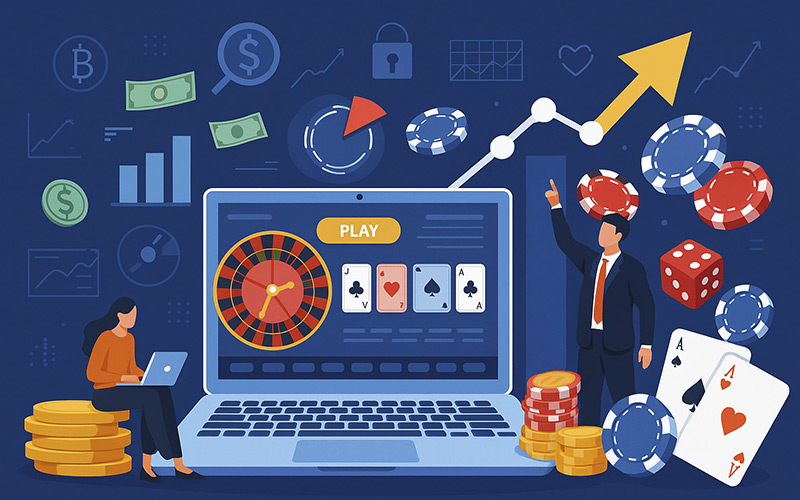
The interactive content pipeline is larger than ever. The global interactive gambling market is projected at $327.2 billion (the casino segment accounted for $130.9 billion). This explains why suppliers, studios, and platform owners are all fighting for visibility in the same digital space.
This growth also brings pressure. When hundreds of games compete for the same lobby rows, quality alone cannot guarantee results. A game may have attractive graphics, fair mechanics, and a reliable technical base, yet still fail if players never see it or do not understand why it deserves a click.
Operators now treat visibility as a commercial asset. The most valuable lobby positions usually go to products that match player demand, support brand strategy, and show strong early indicators. Developers who understand this reality have a better chance to create games that fit the operator’s actual plan.
A title should be designed with the platform environment in mind. This includes the audience profile, regional preferences, promotion calendar, bonus logic, and mobile traffic share. A game built without this context may feel impressive in a demo, but the live result can be weak.
The strongest suppliers now think beyond the release file. They consider how the title will be introduced, which player groups it should reach, what message the operator can use, and how the release can remain relevant after the launch week.
High-Performing Game Breakdown
A strong casino title in 2026 should be judged through a combination of commercial, behavioural, and technical signals. A short spike can look exciting, but the deeper value appears only when players continue to return.
The main signs of solid performance:
- Strong early traction. A good release should show demand during test phases, soft launch, or the first operator placements. Early data does not guarantee long-term success, but it helps identify whether the idea deserves wider distribution.
- Sustainable player value. A title should keep activity alive after the first promotional push. If bet volume falls sharply within several weeks, the game may be more of a campaign product than a stable revenue engine.
- Clear unit economics. Operators need to understand GGR per player, average session value, repeat play, and share of wallet. These indicators show whether the game contributes to the business or only fills space in the catalogue.
- Regional adaptability. A top title should work across several markets with limited rework. Visuals, reward logic, payment context, and local restrictions may differ, but the core experience should remain strong.
- Operator-friendly positioning. The game should be easy to promote, segment, and place. If the concept is too unclear, the operator will need more effort to explain it, and that can limit its commercial potential.
Visibility Before the Release
A game can lose momentum before players even get a chance to judge it. Distribution, lobby placement, and operator cooperation decide how much attention the product receives during its most important early period.
Operator Alignment
Before development reaches the final stage, suppliers should understand what operators want from a title. Some brands need content for casual mobile users. Others search for high-volatility slots, live-style mechanics, or regional themes. A supplier that knows the difference can shape a more relevant product.
Not every game should follow the same commercial template. Releases should have a clear place in the operator’s environment. A title designed for premium traffic, bonus campaigns, or localised content hubs should support that role from the beginning.
Franchise Potential
Some titles become valuable because they create a recognisable world. Players remember symbols, characters, bonus structures, or visual style, which makes future releases easier to promote.
A game series can give operators a ready-made story. The first title creates proof of demand. The next release builds on familiar elements. Over time, the franchise can become a search-driven product because users actively look for the next version.
Personalised Distribution
Modern casino lobbies cannot treat all players in the same way. A large catalogue needs smart delivery because different users respond to distinct products. Some prefer classic slots. Others search for crash content, live casino, bonus buys, card games, or fast mobile rounds.
Personalised distribution helps match player groups with relevant content. The logic is simple. A title performs better when it reaches users who already show interest in similar mechanics, bet ranges, and session patterns.
Data: Helpful but not Magic

Data gives developers a safer way to test ideas, but it should guide creativity rather than turn every title into a copy of the last successful release. The best production process uses numbers as a filter instead of a substitute for human judgement.
Useful data areas:
- test market results;
- social casino behaviour;
- early retention signals;
- session length;
- bet frequency;
- GGR per user;
- return play;
- regional preference patterns;
- month-six and month-twelve rankings.
The value of testing is clear. A studio can launch a product in a controlled environment, watch how players react, and decide whether the title deserves more investment. This reduces risk and helps teams avoid large-scale launches built on guesswork.
However, data can also mislead. A game may spike in week one because of heavy promotion, homepage placement, or bonus support. Once that extra attention disappears, the real pattern becomes visible. This is why long-term performance is more important than a loud start.
Developers and operators should look at what happens after the first wave. If players still return after several months, the game has stronger commercial value. If activity falls away quickly, the launch may have created noise without lasting demand.
Data also shows that good games can fail without support. A polished product may sit too low in the lobby or receive weak campaign attention. At the same time, an average title can perform better than expected if operators place it well and match it with the right audience.
AI, Speed, and the Risk of Similar Games
Artificial intelligence has become part of online casino production. It can help teams analyse behaviour, speed up asset creation, test ideas, support personalisation, detect fraud, and improve responsible gambling tools. It gives studios more capacity and helps operators react faster. The strongest use of AI in casino game production should support real design teams.
Areas that benefit from AI plus human collaboration:
- faster production workflows;
- better personalisation;
- stronger fraud monitoring;
- improved responsible gambling tools;
- deeper performance analysis;
- quicker quality assurance;
- more accurate segmentation.
This is the positive side. AI can reduce repetitive work and help teams spend more time on concept, balance, and product quality. It can also make personalised journeys more precise because platforms can connect behaviour, game preference, and risk signals in real time.
The concern is volume without depth. If too many studios use the same tools, datasets, and trend logic, many releases may start to look alike. The lobby then fills with titles that have different names but similar themes, bonus structures, visual patterns, and reward flows.
This creates a real risk for long-term engagement. Players may try a game once, but they will not remember it if the experience feels interchangeable. A top-performing title requires an identity. AI can assist with production, but the concept still needs a human spark.
There is also a creative risk in overusing past performance. If every studio follows yesterday’s winning pattern, innovation slows. Fish themes, collect mechanics, expanding reels, bonus buys, and familiar jackpots can all work well, but repetition eventually weakens their impact.
The best approach is balance. Data and AI can show what players understand, where they drop out, and which features support return sessions. Creative teams still need freedom to test unusual ideas, because the next standout product may come from a decision that no model predicted.
Player Behaviour by Generation
Online casino audiences do not behave as one group. Game design in 2026 has to respect the habits of older players and digital-native users at the same time. This creates a difficult but important task for developers.
Older Players
Many experienced casino users prefer clarity, familiar rules, and steady pacing. They often respond well to classic slots, bingo, card games, roulette, and other traditional formats. These products are easy to understand and do not require long explanations.
This audience may also accept longer sessions. A slower build-up, recognisable symbols, and regular gameplay rhythm can feel comfortable. The design does not need to be overloaded with interactive layers if the core mechanic already works.
Digital-Native Players
Younger audiences bring different expectations. They grew up with mobile apps, social feeds, short video platforms, streaming interfaces, and instant feedback. These habits affect how they judge a casino game.
They often want the product to explain value quickly. The interface should show what is happening, why a feature matters, and what the next possible reward looks like. Confusing paytables, unclear symbols, and slow feature build-ups can lead to fast exits.
Balanced Approach
The best games do not have to choose one age group and ignore the other. A strong title can combine a simple entry with deeper layers. The first session should feel clear, while later sessions can reveal more features, goals, or bonus routes.
This balance supports wider distribution. A simple base game can attract casual users. Additional progression, interactive bonus stages, or tournament features can create more depth for engaged players.
Designers should also think about monetisation carefully. If the game feels too tight, too aggressive, or too complex, younger users may leave quickly. If it is too chaotic, older audiences may avoid it. Strong maths, transparent outcomes, and smooth UX help both groups.
Relevant Mechanics
Modern casino games need mechanics that create movement, clarity, and a reason to return. The most successful features usually fit the audience, theme, and reward structure.
The mechanics relevant in 2026:
- Cascading reels and expanding layouts. These features make each round feel more active. They also create a sense of chain reaction, which can support longer sessions when balanced well.
- Megaways-style systems. Flexible reel structures add variety to every spin. Players see the layout change, which helps the game feel less repetitive.
- Progressive jackpots. Shared prize pools create anticipation and can become strong marketing assets. They are especially useful when operators want a title to support campaigns and tournaments.
- Crash-style elements. Crash mechanics offer visible risk, instant decisions, and simple tension. Developers now adapt parts of this format into slots, bonus sessions, and live products.
- Hybrid extra rounds. Choice-based features can let players pick paths, reveal tiers, unlock maps, or interact with timed elements. The outcome remains chance-based, but the experience feels more active.
- Persistent progression. Long-term goals can encourage repeat sessions. Unlockable features, status levels, collections, and missions give players a reason to return beyond one spin cycle.
- Social mechanics. Rankings, tournaments, shared challenges, and community goals can support engagement. They work best when the feature adds excitement without making the product harder to understand.
Layered bonus structures also deserve attention. A single trigger can still be effective, but many players now respond well to multi-stage features that combine free spins, multipliers, pick rounds, and visible progression.
The challenge is restraint. More mechanics do not automatically create a better game. If the product becomes too busy, players may lose the main idea. A top-performing title usually has one clear centre and several supporting features around it.
The New Formula for a Top Title

The strongest online casino games in 2026 will combine several qualities. They will have clear mechanics, good pacing, smart distribution, commercial logic, and enough originality to be remembered. No single feature can carry the whole product.
A successful title should be easy to enter and rewarding to revisit. The first few seconds should help the player understand the theme, the core action, and the possible reward path. Later sessions should provide more reasons to stay, such as bonus variety, progression, tournaments, or familiar franchise value.
For operators, the product must also fit the platform. A game that works well for mobile-first casual users may not suit a high-value VIP audience. A crash-inspired title may need a different promotion than a classic slot. A franchise release may deserve homepage support, while a niche product may perform better through segmentation.
For developers, the main task is to create games with lasting value. This requires more than speed. Fast production can help fill the pipeline, but it does not create loyalty by itself. Studios need to know which titles can become long-term engines and which ones are useful only for short campaigns.
The same logic applies to AI. It can help with production speed and analytical depth, but it cannot replace taste, originality, and market understanding. The best teams will use technology to improve creative work, not flatten it.
The market will reward developers who understand both sides of performance. A game should excite players and make sense for operators. It should feel simple enough to start, deep to revisit, and flexible to travel across markets.
The Main Things about Top-Performing Online Casino Games in 2026
The real value of strong gambling content appears when the title keeps players active, gives operators clear commercial benefits, and stays relevant across different markets.
Key aspects to remember:
- A strong title needs visibility, operator support, and clear market positioning from the earliest stage.
- Long-term performance matters more than a short release spike, because month-six and month-twelve results show whether the product can become a real revenue engine.
- Data should guide development, testing, and segmentation, but creative judgement remains essential for original ideas.
- AI can improve production, analysis, personalisation, and safer gambling systems, but careless use can make game portfolios look generic.
- Mechanics, audience behaviour, distribution strategy, and platform fit decide whether players return after the first session.
Operators that want stronger casino content should treat game selection as a strategic part of the whole platform. Order a turnkey casino solution and connect reliable game content at Gaminator to build a platform prepared for long-term performance in 2026.

Check the information used to contact us carefully. It is necessary for your safety.
Fraudsters can use contacts that look like ours to scam customers. Therefore, we ask you to enter only the addresses that are indicated on our official website.
Be careful! Our team is not responsible for the activities of persons using similar contact details.