Casino Configurator
DR Congo’s iGaming Market: Billion-Dollar Turnover Without Oversight
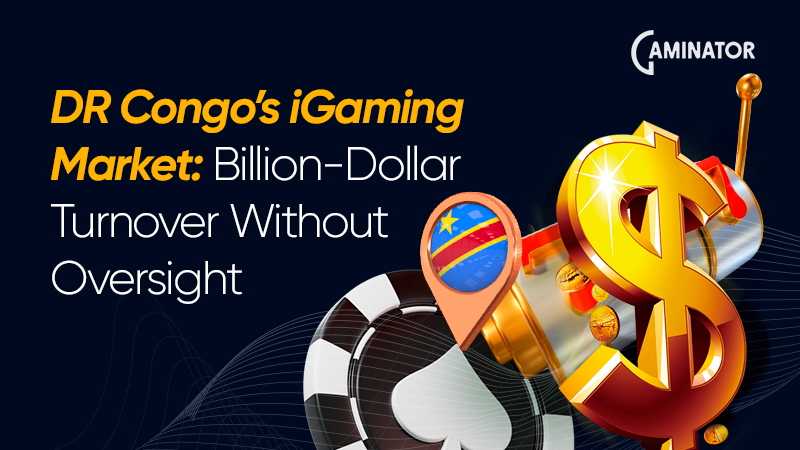
Louis Richard Tshimbalanga, Congoflex Sarl’s CEO and PstBet Congo’s Country Manager, emphasises that the African jurisdiction currently lacks a comprehensive oversight framework. Furthermore, he points out the need for reliable instruments to accurately gauge the scale of the domestic entertainment sector.
Regulatory Gaps and Their Impact on the Market
As noted by the DRC’s Minister of Finance, Doudou Fwamba, iGaming brands have generated roughly $1.7 billion in annual profits since the enactment of the fundamental gambling law. Yet only around $1 million in taxes has flowed into the national treasury.
To address this imbalance, the authorities passed a bill last year intended to regulate all types of land-based and online entertainment. Although the document was approved, sufficient measures for already operating niche companies have yet to be introduced.
Mr Tshimbalanga remarked that the sphere is expanding at a rapid pace but in a rather disorganised manner. He stressed that neither clearly defined legal mechanisms nor a fully functioning regulatory body are in place. The absence of a coherent supervisory framework has led to an unprecedented situation in which business owners enjoy considerable freedom due to the lack of even the most basic market rules.
The CEO of a well-known local gambling firm, who preferred to stay incognito, echoed this opinion. The executive explained that the existing system operates primarily on a declarative basis, under which entrepreneurs voluntarily submit information to government agencies.
The market has evolved into a unique centre for sports betting and lotteries, with business owners being formally authorised and paying taxes. However, operators contribute to the state budget only to the extent they consider appropriate. Hence, the nation lacks adequate mechanisms to enforce its regulatory policies effectively.
Rule‑Makers Behind the Gambling Sector
Within the current market structure, 2 key organisations can be distinguished. While both share the goal of establishing a uniform trajectory for sphere development, their efforts in this direction are frequently inconsistent and lack proper coordination.
Société Nationale de Loterie (SONAL)
Main information about the association:
- is state-owned;
- supports national social and cultural initiatives;
- was established under Ordinance No. 84-155 (July 4th, 1984);
- is authorised to run games of chance, lottery draws, and betting pools.
At the outset, the brand enjoyed an exclusive legal monopoly over raffles and bookmaker operations. However, subsequent efforts to modernise the regulatory framework have made its role increasingly ambiguous. In certain instances, the company has even taken on supervisory functions, obliging niche operators to remit 7% of their monthly gross revenue.
SONAL defends its position by referring to the historical monopoly that existed before the market was digitalised. Yet in light of today’s widespread Internet access and rapid technological progress, the association’s approach appears rather outdated and misaligned with current realities.
Congo’s Ministry of Finance
The institution fulfils a sovereign fiscal function by imposing a 10% tax on every winning ticket. Mr Tshimbalanga highlighted that this is where the primary concern arises, noting that regulators and agencies attempting to perform their duties lack the necessary tools to evaluate the market’s real size, since they have no access to essential consolidated data.
The Ministry’s stance is further undermined by its legal “blindness” to mobile payments, which represent operators’ main revenue stream. This situation has emerged due to restrictions linked to consumer data protection. Legislation in this field requires revision. In its current form, the model casts doubt on the justification of the 10% tax imposed by Congo’s institution.
Mobile Transactions as the Backbone of Gambling Operations

The country's population is estimated at roughly 112 million. A considerable share of these individuals actively utilise payment systems tailored for portable devices.
At present, 4 major providers dominate the market:
- Mpesa;
- Afrimoney;
- Airtel Money;
- Orange Money.
Mobile transactions have become an integral part of the nation’s iGaming sector. Data regarding all financial activities processed through these platforms is protected by ARPTC, which possesses no legal authority to disclose such information to third parties.
These constraints are enshrined in Law 20/017 (November 25th, 2020) and reinforced by amendments to the Digital Code (March 13th, 2023). Under these provisions, personal data may be processed only with the individual’s permission or at the request of the prosecutor’s office. As a result, regulatory bodies remain without effective instruments to properly supervise the industry.
Strategies to Resolve Congo’s Oversight Challenges
Mr Tshimbalanga is confident that the situation can be improved. However, he underlined that genuine progress can be achieved if the authorities focus on developing the promised centralised monitoring system. Such a move would simplify the collection of baseline data and provide a foundation for future operations and analytical planning.
He warned that persistent delays in implementing reforms could cost the country substantial economic opportunities and diminish its appeal to leading global companies. Establishing a transparent framework and a unified, legitimate regulatory body is essential for fostering effective cooperation between the government and businesses.
A modernised, well-balanced system would safeguard the interests of all stakeholders by ensuring:
- lower financial risks for gambling operators;
- a secure, fraud-free gaming realm for players;
- reliable funding for social programmes for the population;
- a transparent environment for entertainment content suppliers;
- attractive, long-term investment conditions for potential sponsors.
Stay informed about the latest legislative updates in key jurisdictions with Gaminator. If you wish to establish a thriving, revenue-generating gambling enterprise, feel free to contact us. Our professional team will help you choose the best destination for this purpose and support at every stage of business development.

Check the information used to contact us carefully. It is necessary for your safety.
Fraudsters can use contacts that look like ours to scam customers. Therefore, we ask you to enter only the addresses that are indicated on our official website.
Be careful! Our team is not responsible for the activities of persons using similar contact details.